
Introduction
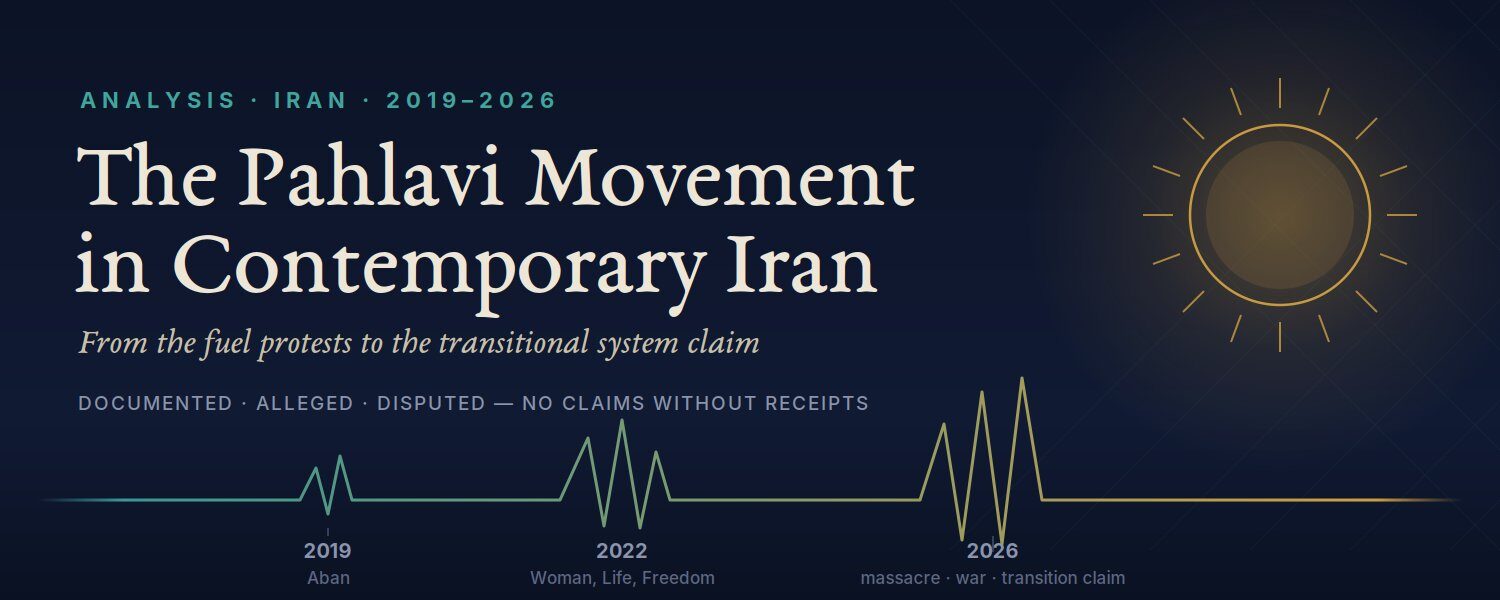
When Iranians poured into the streets in November 2019 over a sudden fuel price hike, few outside observers predicted that within seven years the son of the last Shah would be publicly claiming leadership of a transitional government-in-waiting, endorsed by mass diaspora rallies and courted by Western governments — or that this claim would remain as contested among Iranians as the regime it seeks to replace.
This article traces the trajectory of the Pahlavi movement — the loose constellation of monarchists, constitutionalists, and secular nationalists gathered around Reza Pahlavi — from the 2019 protests through the war of 2026 and its aftermath. It examines what the movement did, what it achieved, where it failed, and what would be required for it to succeed. It deliberately presents both the movement’s case for itself and the strongest criticisms against it, grading claims by the quality of evidence behind them. It is neither hagiography nor polemic; Iranians deserve an honest accounting of every force claiming to speak for them.
A note on scope: while the article centres on 2019–2026, the monarchist revival began earlier, and the first section briefly covers the necessary pre-history.
Part I: The Legacy and the Baseline
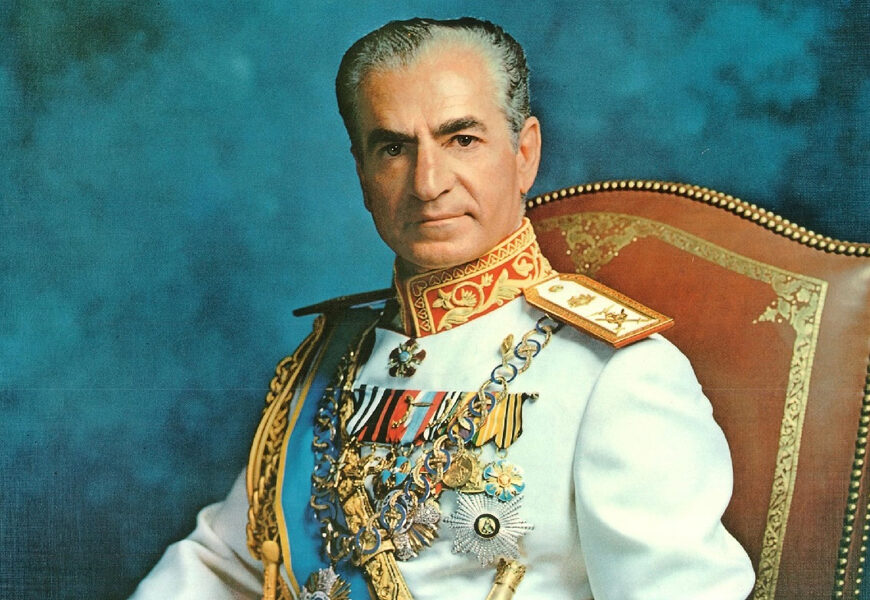
The Pahlavi dynasty (1925–1979) left a genuinely contested inheritance. Supporters remember state-led modernisation, the expansion of women’s legal rights (suffrage in 1963, the Family Protection Law), mass education, industrialisation, and a period when Iran’s passport and currency carried international weight. Critics remember an authoritarian state, SAVAK’s political repression, the 1953 coup’s shadow, suppressed political life, and a development model that concentrated wealth and alienated both the religious classes and the left. Both memories are grounded in fact; the argument is over emphasis.
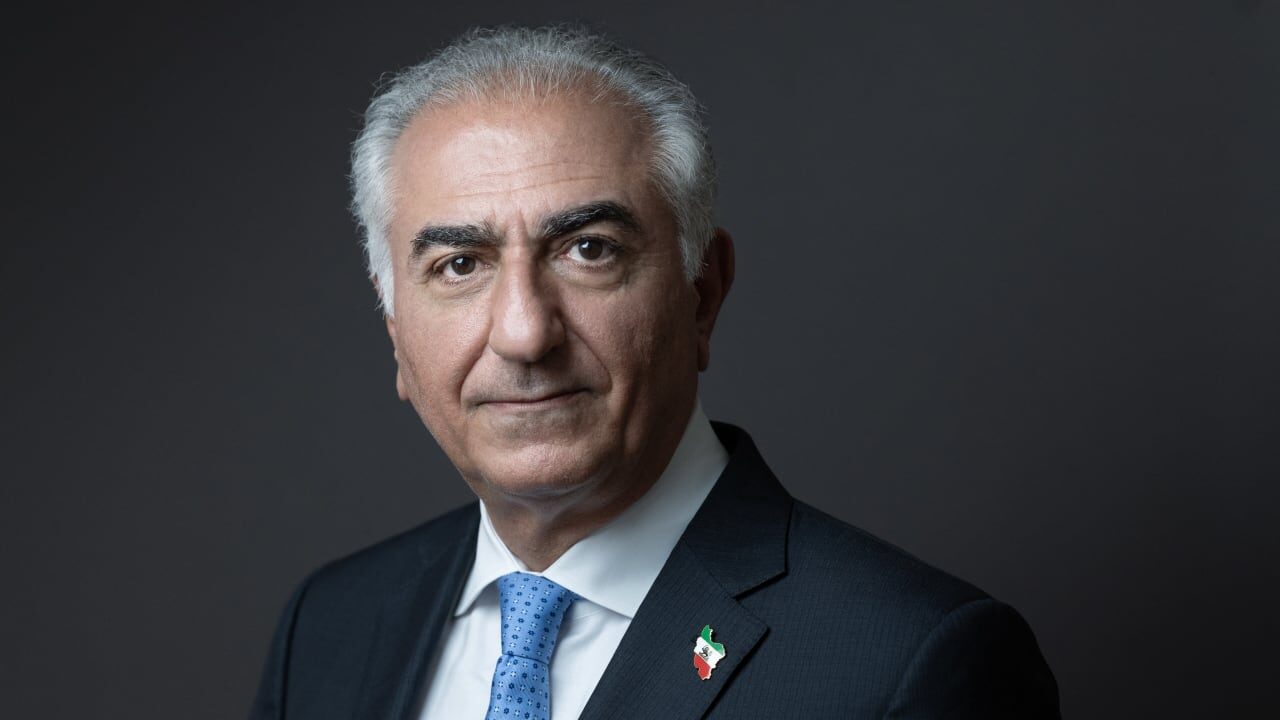
Reza Pahlavi, born in 1960, left Iran in 1978 for pilot training and never returned. After his father’s death in Cairo in 1980, he was proclaimed heir by monarchist loyalists, but for most of the following four decades he positioned himself not as a claimant to a throne but as an advocate for secular democracy, human rights, and a national referendum on Iran’s future form of government. He commented on and encouraged earlier protest waves but commanded no organised structure inside Iran, and through the 2000s and early 2010s he was widely regarded — including by many in the diaspora — as a marginal figure presiding over a nostalgic remnant.
Two slow-moving forces changed that. The first was generational: Iranians born after 1979, with no memory of the monarchy’s faults, measured the Islamic Republic against its own promises and found it wanting. The second was media: from 2010 onward, London-based Manoto TV’s satellite programming — archival footage, documentaries, and entertainment that presented pre-revolutionary Iran without the regime’s demonology — reached tens of millions inside Iran and quietly rehabilitated the Pahlavi era in popular memory. Critics called it soft propaganda; its effect on nostalgia is widely acknowledged across the political spectrum, even by the movement’s opponents.
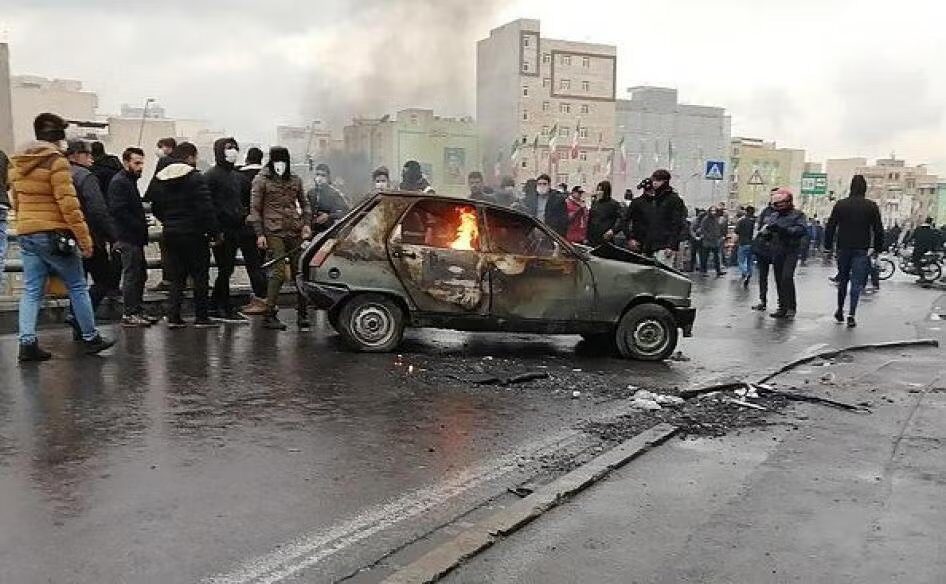
Part II: 2017–2021 — The Death of Reformism and the Return of the Name
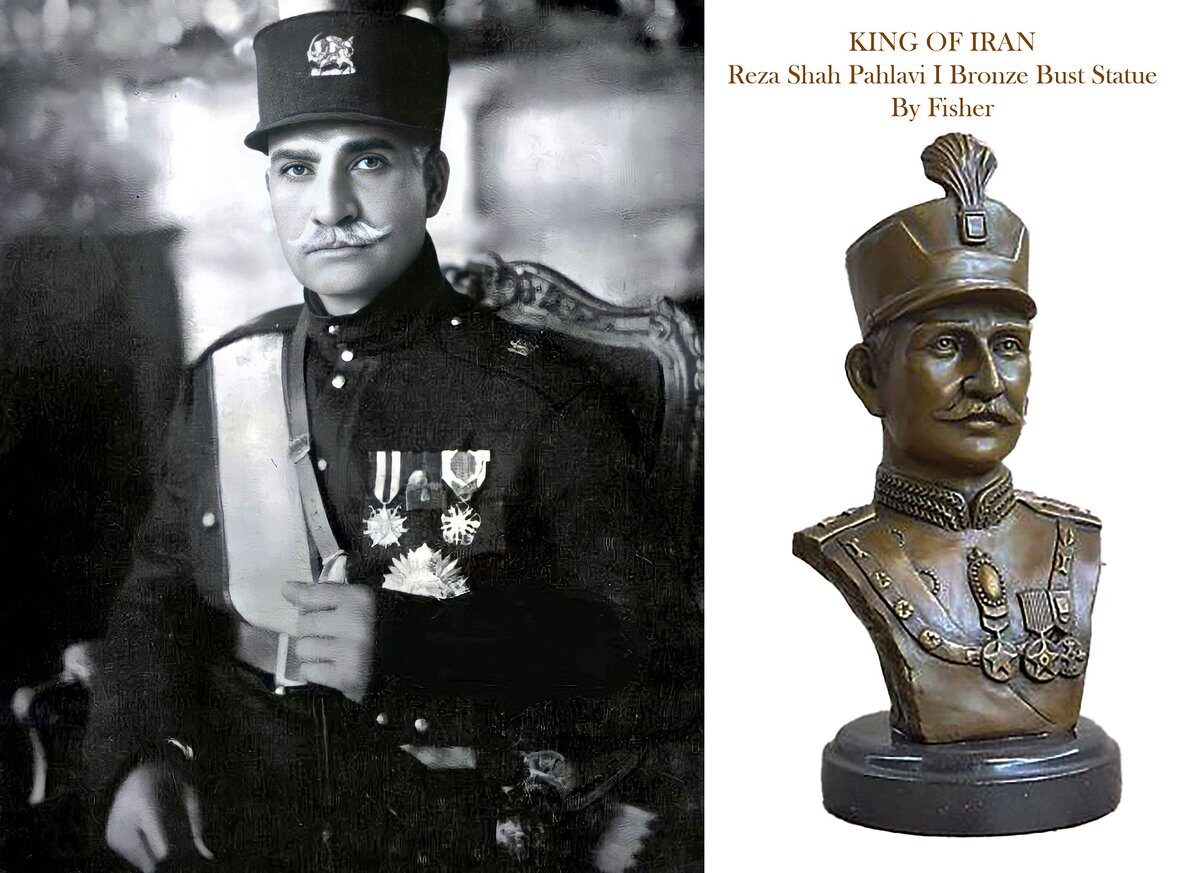
The contemporary monarchist revival has a datable public beginning: the Dey 1396 protests of December 2017–January 2018. Sparked in Mashhad over economic grievances, they spread to over a hundred cities and produced a slogan that stunned observers: “Reza Shah, rouhet shad” (“Reza Shah, bless your soul”). For the first time since 1979, invoking the dynasty’s founder was a mass protest act inside Iran, not an émigré fantasy. Equally significant was “eslahtalab, osoulgara, digeh tamoom-e majara” — “reformist, principlist, the game is over” — a rejection of the entire post-1979 political spectrum that implicitly opened space for alternatives outside it.
The November 2019 fuel protests (Aban 1398) transformed the stakes. The regime’s response — a near-total internet blackout and live fire on crowds — killed, by Reuters’ estimate based on official sources, around 1,500 people in under two weeks; Amnesty International documented a lower but still unprecedented figure of 300+. [Both figures should be cited with their methodologies; they differ substantially and the gap itself is part of the story.] Aban did three things relevant to this article. It demonstrated that the regime would use unlimited force, discrediting incrementalism. It killed reformism as a credible strategy for a large share of the public — a shift later confirmed by the engineered, historically low-turnout elections of 2020 (Majles) and 2021 (Raisi’s presidency). And it created a martyrology and a protest calendar that subsequent movements, including the monarchists, would build on.
January 2020 added another layer: the IRGC’s downing of Ukraine International Airlines Flight PS752, killing 176 people, followed by days of denial. The disaster radicalised a highly educated, transnational constituency — the victims’ families and their communities in Canada and Europe — and produced figures like Hamed Esmaeilion, who would later become both a coalition partner and a rival pole to Pahlavi.
During this period Reza Pahlavi issued statements, gave interviews, and promoted civil disobedience and what he called a “national rebirth,” but the movement’s growth was largely organic and bottom-up: the regime’s failures, not exile organisation, drove the revival of the name. This is a point both supporters and critics should concede — supporters because it shows authentic domestic roots, critics because it shows the phenomenon cannot be dismissed as a foreign or émigré fabrication.
An organisational footnote that matters later: in 2018, a group of younger diaspora professionals founded Farashgard (the Iran Revival network), explicitly aligned with Pahlavi, and US-based advocacy groups such as the National Union for Democracy in Iran (NUFDI) began building a Washington presence around his platform. These were small, but they were the seeds of the infrastructure that surfaced in 2022–2026.
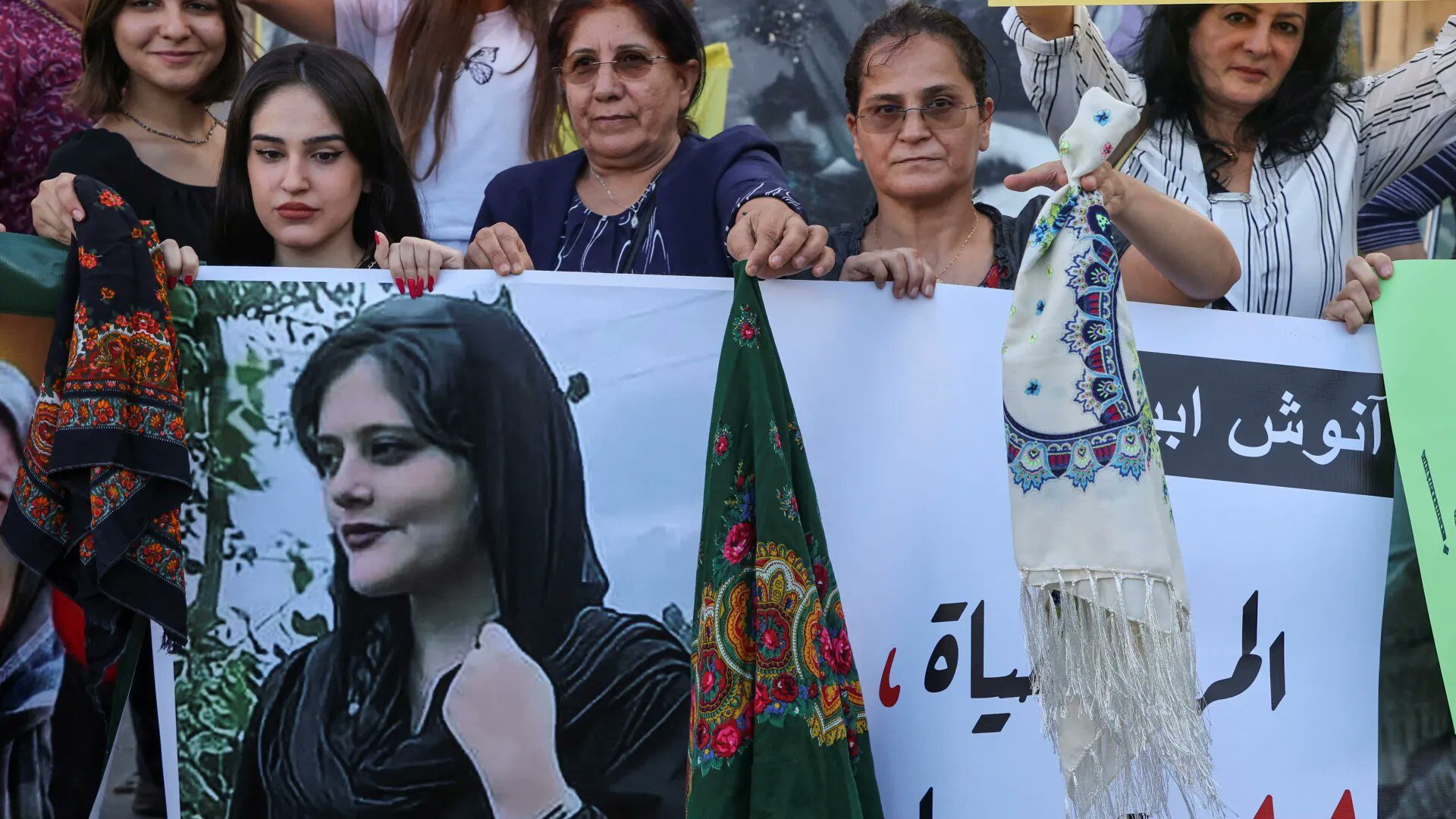
Part III: Woman, Life, Freedom and the Monarchist Surge (2022 – early 2023)
The death of Mahsa (Jina) Amini in morality-police custody in September 2022 ignited the broadest uprising in the Islamic Republic’s history: months of protests across every province, led conspicuously by women and Generation Z, under the Kurdish-origin slogan “Woman, Life, Freedom.” The uprising’s core was not monarchist — it began as a feminist and anti-regime revolt with strong Kurdish and Baluch dimensions — and honest analysis must resist retroactively painting it in any faction’s colours.
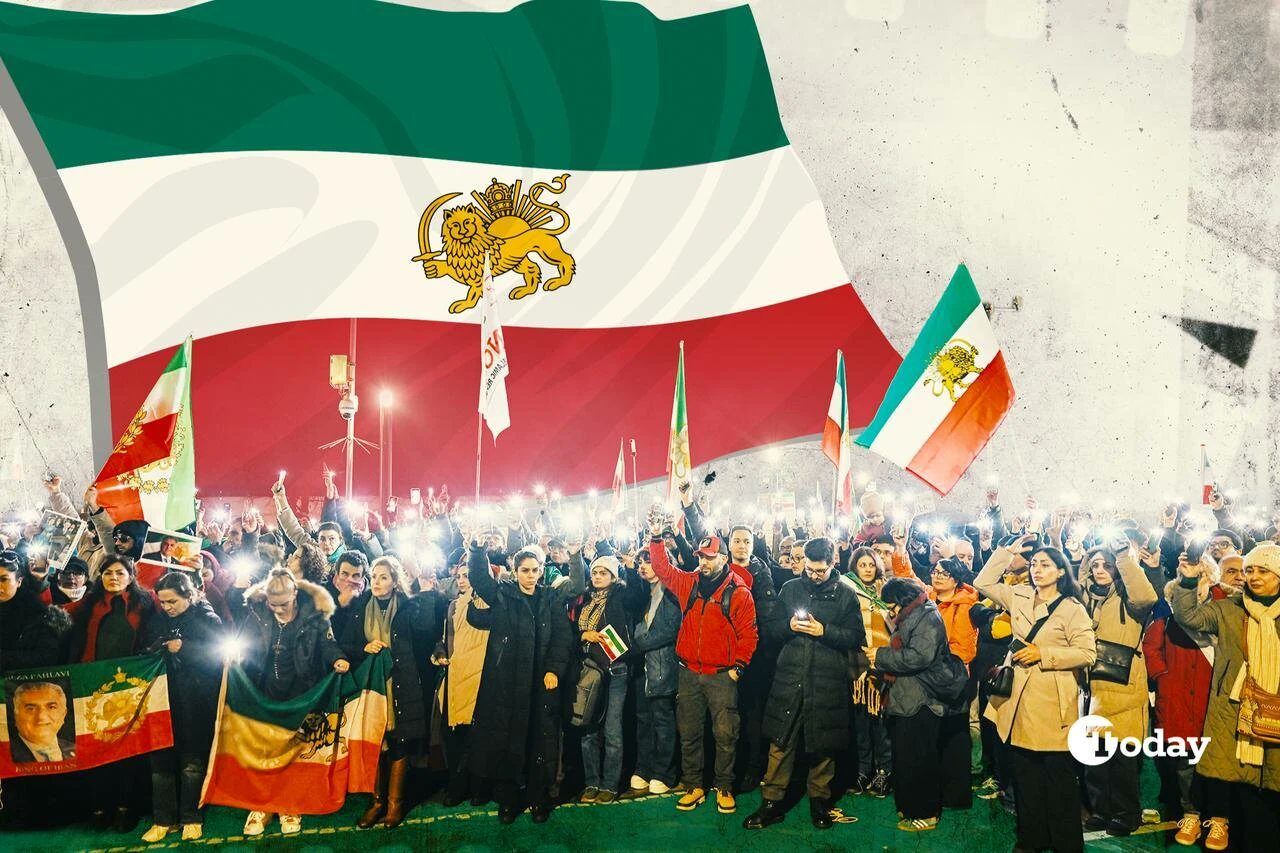
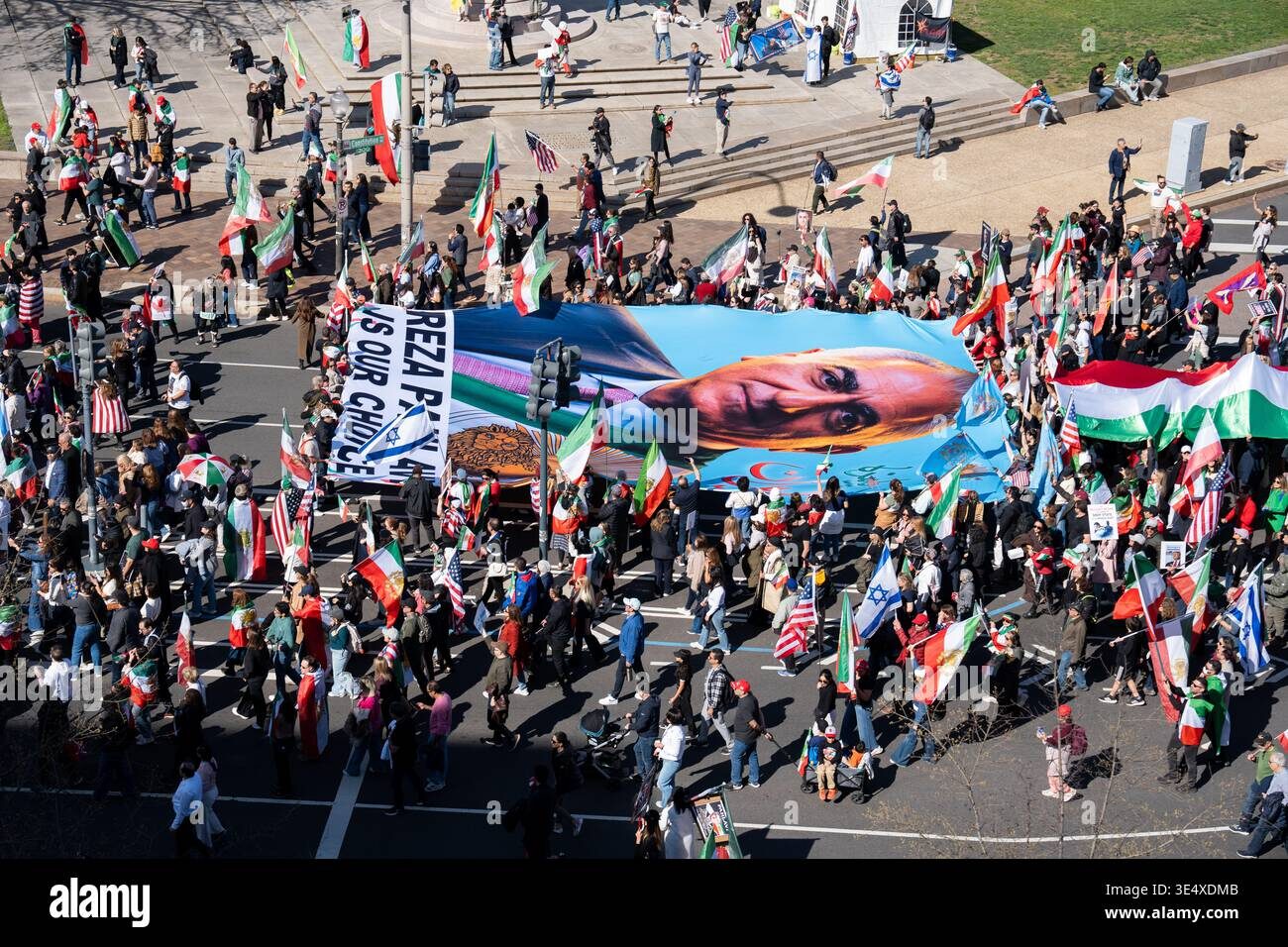
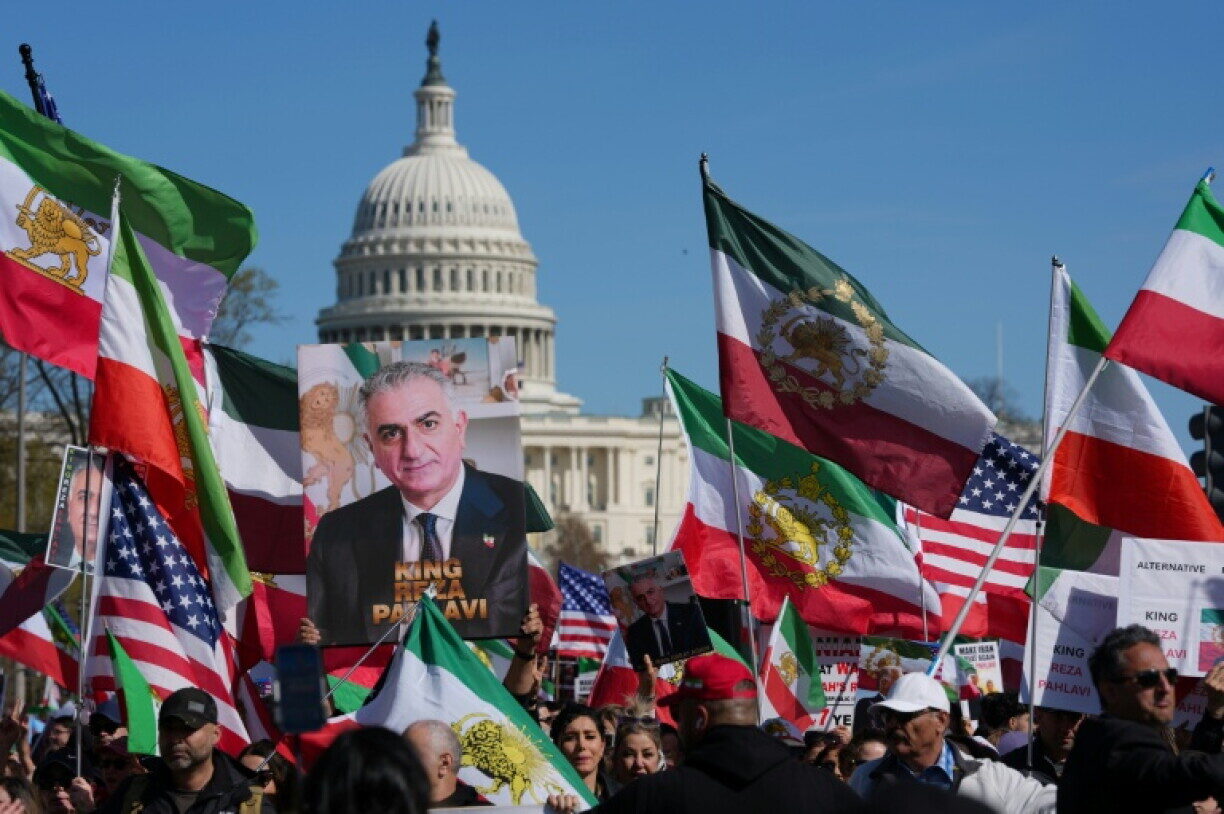
But monarchist symbolism was undeniably present and grew over time: the Lion and Sun flag at diaspora rallies, chants referencing Reza Shah and, increasingly, Reza Pahlavi himself in some cities. The regime’s own security assessments, leaked and public, treated Pahlavi as a serious threat vector for the first time. Diaspora mobilisation reached historic scale — the October 2022 Berlin rally drew an estimated 80,000–100,000 people (organisers’ and police figures varied), the largest Iranian diaspora gathering ever held to that point, and while it was deliberately pluralist, Pahlavi’s supporters were its largest visible bloc.
Pahlavi’s own positioning during the uprising was cautious by design: support for the protesters, calls for Western governments to expel regime ambassadors and designate the IRGC, insistence on a future referendum, and refusal to claim leadership. Critics read the caution as passivity; supporters read it as respect for a movement that had not asked to be led.
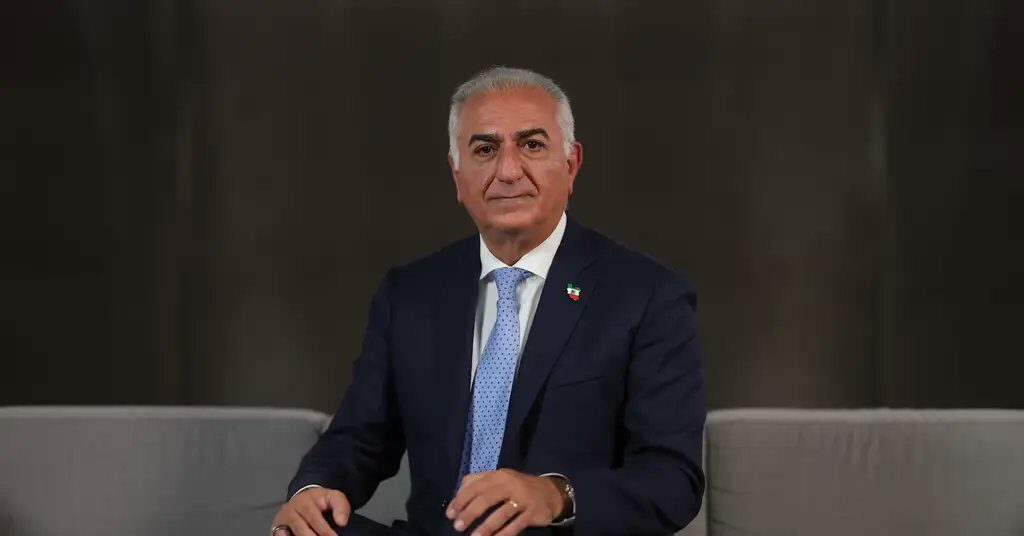
Part IV: The Vekalat Campaign — Mandate or Mirage?
In January 2023, as street protests were being suppressed, a social media campaign erupted around the hashtag #وکالت_میدهم (“I give my mandate”), in which Iranians inside and outside the country declared Reza Pahlavi their representative for the transition period. The campaign generated millions of posts within days and was amplified by celebrities, athletes, and prominent expatriates. It remains the single most important legitimacy event in the movement’s modern history — and one of its most contested.
The case that it mattered: the campaign originated at least partly from inside Iran, at real personal risk; it forced every other opposition figure to respond to Pahlavi’s centrality; and it gave concrete form to what polling (see Part XI) suggested — that he was the most popular single named figure.
The case for skepticism: hashtag volume is not a mandate. Analysts documented significant bot amplification and duplicate activity (as occurs in virtually all large Persian-language campaigns, on all sides); participation was self-selected; and a mandate for “transition” was left deliberately vague — many participants explicitly gave the mandate for a demolition role, not a governing one. Republican critics argued the campaign converted a pluralist uprising’s energy into one man’s brand.
Both readings contain truth. The honest formulation: vekalat demonstrated that Pahlavi commanded the largest identifiable constituency within the opposition, while proving nothing about majorities, and it entrenched a personalisation of the movement that would repeatedly cost it coalition partners.
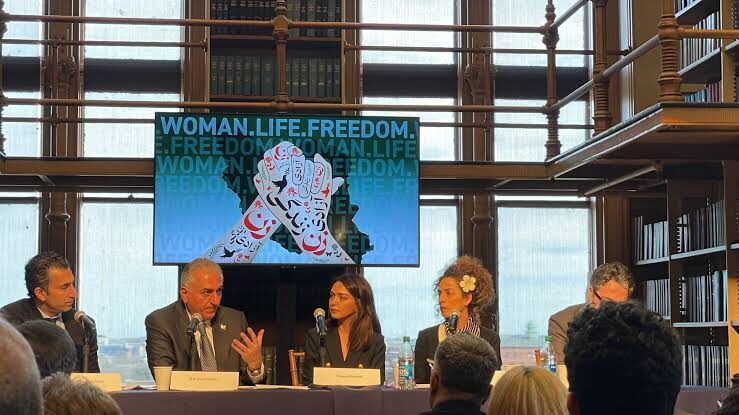
Part V: Georgetown — The Coalition That Lasted Ten Weeks
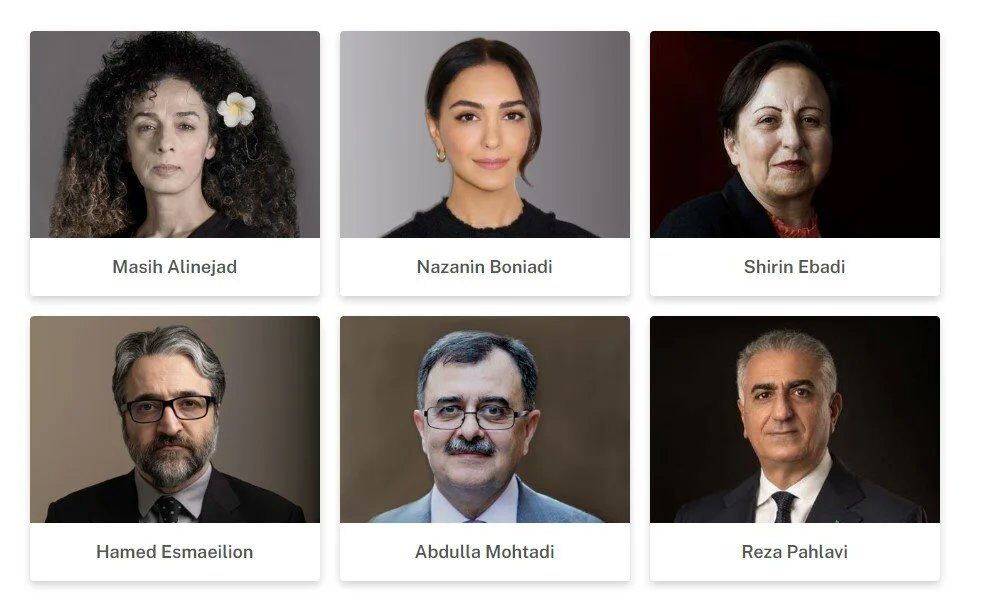
In February 2023, Pahlavi appeared at Georgetown University alongside Masih Alinejad, Hamed Esmaeilion, Nazanin Boniadi, Shirin Ebadi, Golshifteh Farahani, and Abdullah Mohtadi of Komala — an unprecedented tableau spanning monarchist, republican, feminist, Kurdish, and human-rights currents. The group appeared together at the Munich Security Conference, where the regime’s delegation had been disinvited — a symbolic substitution with real diplomatic weight. In March they published the “Mahsa Charter,” committing to territorial integrity, secular democracy, human rights, and a post-regime constituent process.
By May 2023 the alliance was dead. Esmaeilion resigned first, citing “undemocratic” internal dynamics; others followed. The documented grievances, drawn from participants’ own public statements: disputes over expanding membership and decision rules; the behaviour of Pahlavi’s online support base and parts of his advisory circle, which subjected coalition partners — especially Alinejad, Esmaeilion, and Mohtadi — to sustained social-media attack campaigns questioning their loyalty; and disagreement over Mohtadi’s inclusion, which hardline nationalists framed as legitimising “separatism.” Pahlavi’s camp countered that other members sought to dilute his role despite his demonstrably larger base, and that he could not be held responsible for anonymous online accounts.
Grading the evidence: that the coalition collapsed amid mutual recrimination is documented. That coordinated attack campaigns targeted the departing members is well documented by platform analyses and the volume of the content itself. Whether those campaigns were directed by anyone in Pahlavi’s circle, tolerated by it, or genuinely independent has never been established with documentary evidence, and honest accounts must say so. What can be said with confidence is that Pahlavi did not publicly and forcefully repudiate the attacks at the time — a choice, or omission, that partners on all sides cite as the moment trust died.
The strategic consequence was decisive either way: the movement abandoned broad-coalition politics and pivoted to building its own vertical structure. Everything that followed — the Five Pillars, the transitional system, the 2026 leadership claim — flows from that pivot.
Part VI: Strategy — The Five Pillars, the Iran Prosperity Project and the Cyrus Accords
From 2023 onward, and formalised through 2024–2025, Pahlavi articulated a strategy he summarised as five pillars: maximum pressure on the regime; maximum support for the Iranian people; maximum defections from within the system — with repeated direct appeals to the army, police, and rank-and-file IRGC to “join the nation”; maximum organisation of Iranians, particularly abroad; and the Iran Prosperity Project (IPP), a technocratic planning effort involving expatriate economists, jurists, and former officials.
The IPP is the movement’s most distinctive product and deserves serious treatment. Its published framework envisions an “Emergency Phase” of roughly 100–180 days after regime collapse focused on security continuity, preventing state disintegration, maintaining basic services and salaries, stabilising the currency, and asset recovery — followed by a constitutional process: a constituent assembly, a referendum on the form of government (explicitly including a republic as an option), and internationally supervised elections, after which the transitional structure dissolves. Supporters point out, correctly, that no other opposition current has produced planning documents of comparable specificity; the standard opposition failure is sloganeering about the day the regime falls with silence about the day after. Critics respond, also correctly, that a plan written in exile with no enforcement mechanism is a prospectus, not a government — and that the plan’s guarantee of its own dissolution rests entirely on the good faith of the man it empowers.
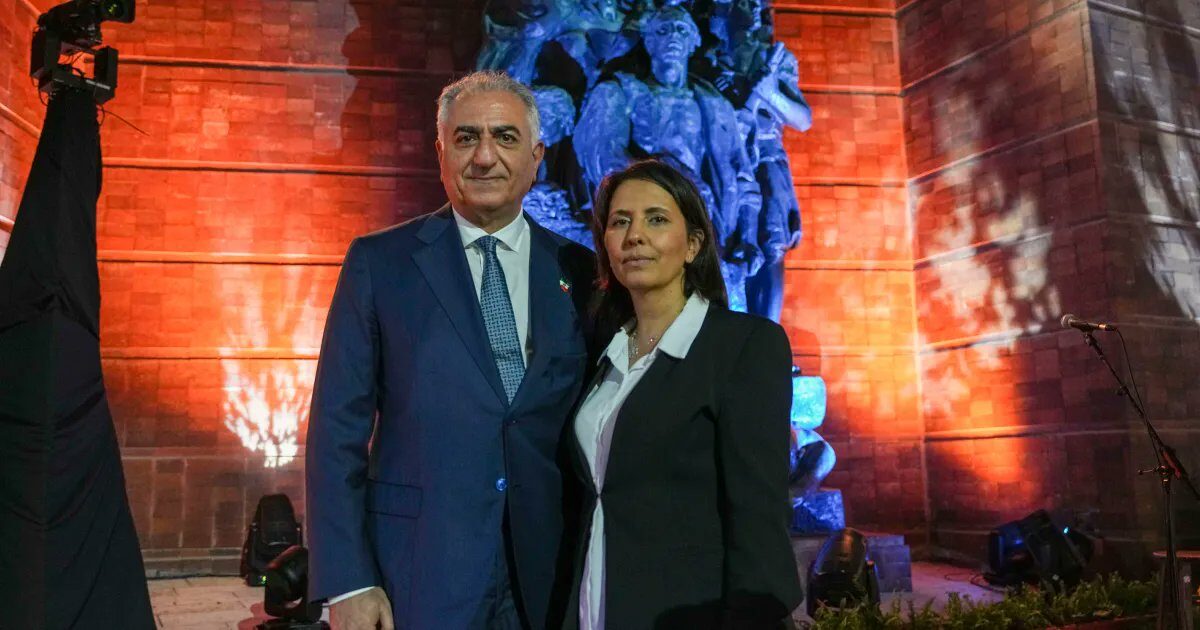
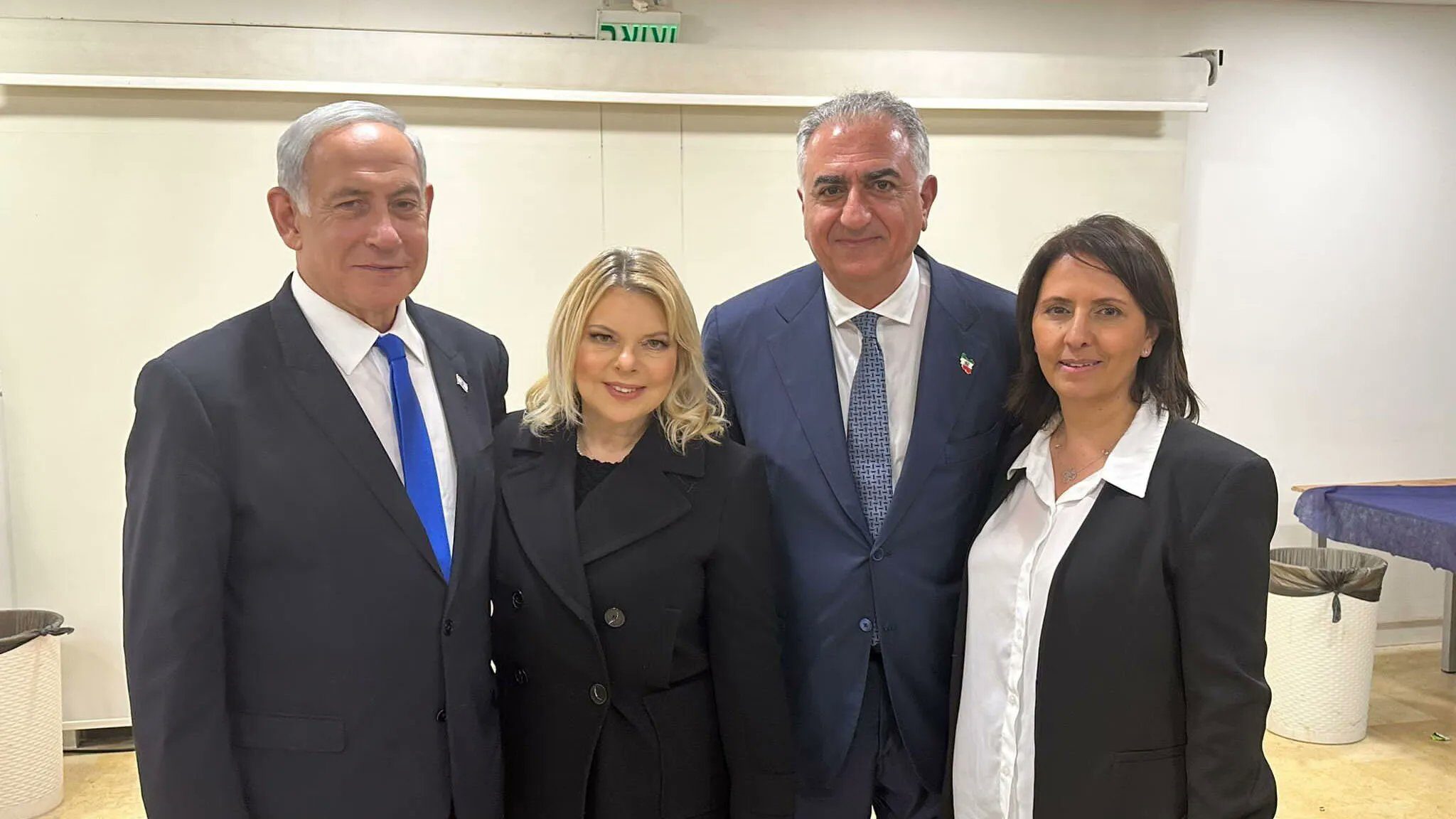
Foreign policy became the movement’s sharpest differentiator and its greatest vulnerability. Pahlavi’s April 2023 visit to Israel — meeting President Herzog, visiting Yad Vashem and the Western Wall — was unprecedented for any Iranian opposition figure. He framed a future normalisation as the “Cyrus Accords,” invoking Cyrus the Great’s association with Jewish history, and argued that the Iranian people and Israel share an enemy in the regime, not with each other. The visit electrified his base and much of the Israeli public, generated genuine goodwill infrastructure (Persian-language Israeli outreach, later the “Iranian-Israeli” civil society track), and positioned him as the only opposition figure with a worked-out regional vision. It simultaneously handed the regime its preferred narrative — that the movement is a Western-Israeli project — and discomfited Iranians, including regime opponents, who oppose the Islamic Republic’s regional wars but also distrust Israel, particularly after the Gaza war reshaped regional opinion. The movement never developed persuasive messaging for that middle constituency, and the cost became visible in 2026 when the war made the association concrete.
Part VII: The Machine — Organisation, Media and the Advisor Problem
Assessing the movement requires separating three layers that critics and supporters routinely conflate.
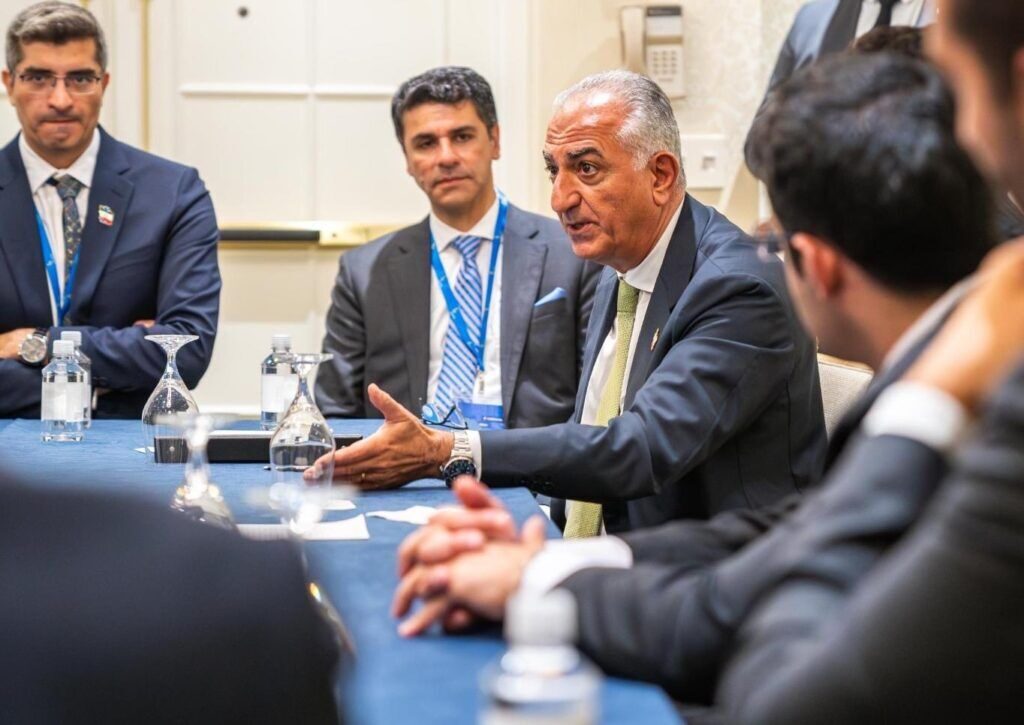
The first layer is Pahlavi himself and his small formal office, which controls his statements, travel, and initiatives such as the IPP. The second is the aligned organisational ecosystem: Farashgard/Iran Revival, NUFDI in Washington (which drove congressional outreach, IRGC-designation advocacy, and later the push for Western recognition of the transitional framework), constitutionalist parties dating to earlier exile generations, and newer bodies created around the 2025–2026 escalation. The third is the online base — the enormous, unorganised, partly anonymous monarchist social-media sphere.
The movement’s media position was a genuine strength: sympathetic or at least intensively covering satellite channels (Manoto, whose satellite programming faced closure pressures in 2025, and Iran International’s saturation coverage), the largest Persian-language social media presence of any opposition current, and increasingly professionalised content. No other faction came close in share of voice.
The advisor problem is the recurring weakness. Throughout 2023–2026, controversies traced not to Pahlavi’s own statements — which remained disciplined, inclusive, and referendum-focused with striking consistency — but to named advisors and prominent supporters: loyalty-test rhetoric, denunciations of critics as MEK agents, “separatists,” or regime assets, and occasional retribution talk that contradicted Pahlavi’s official reconciliation line. The gap between the principal’s message and the circle’s conduct is the single most documented internal criticism of the movement, raised by departed allies, sympathetic analysts, and hostile critics alike. Defenders argue every mass movement has an uncontrollable fringe and that critics hold Pahlavi to a standard applied to no other figure; the difficulty with this defence is that some of the conduct came from formally affiliated individuals, not the fringe. A movement claiming readiness to administer a state is fairly judged on whether it can administer its own advisory circle.
Part VIII: 2024–2025 — Escalation’s Antechamber
The two years before the 2026 war reshaped the movement’s environment faster than its structure.
In May 2024, President Raisi died in a helicopter crash; the succession question for the aging Khamenei moved from taboo to open speculation, with his son Mojtaba increasingly named. The April and October 2024 direct Israel–Iran exchanges broke the shadow-war convention. Pahlavi’s response pattern was consistent: blame the regime for importing war, address Iranians in uniform directly, and press Western capitals to choose “the Iranian people” over another nuclear deal.
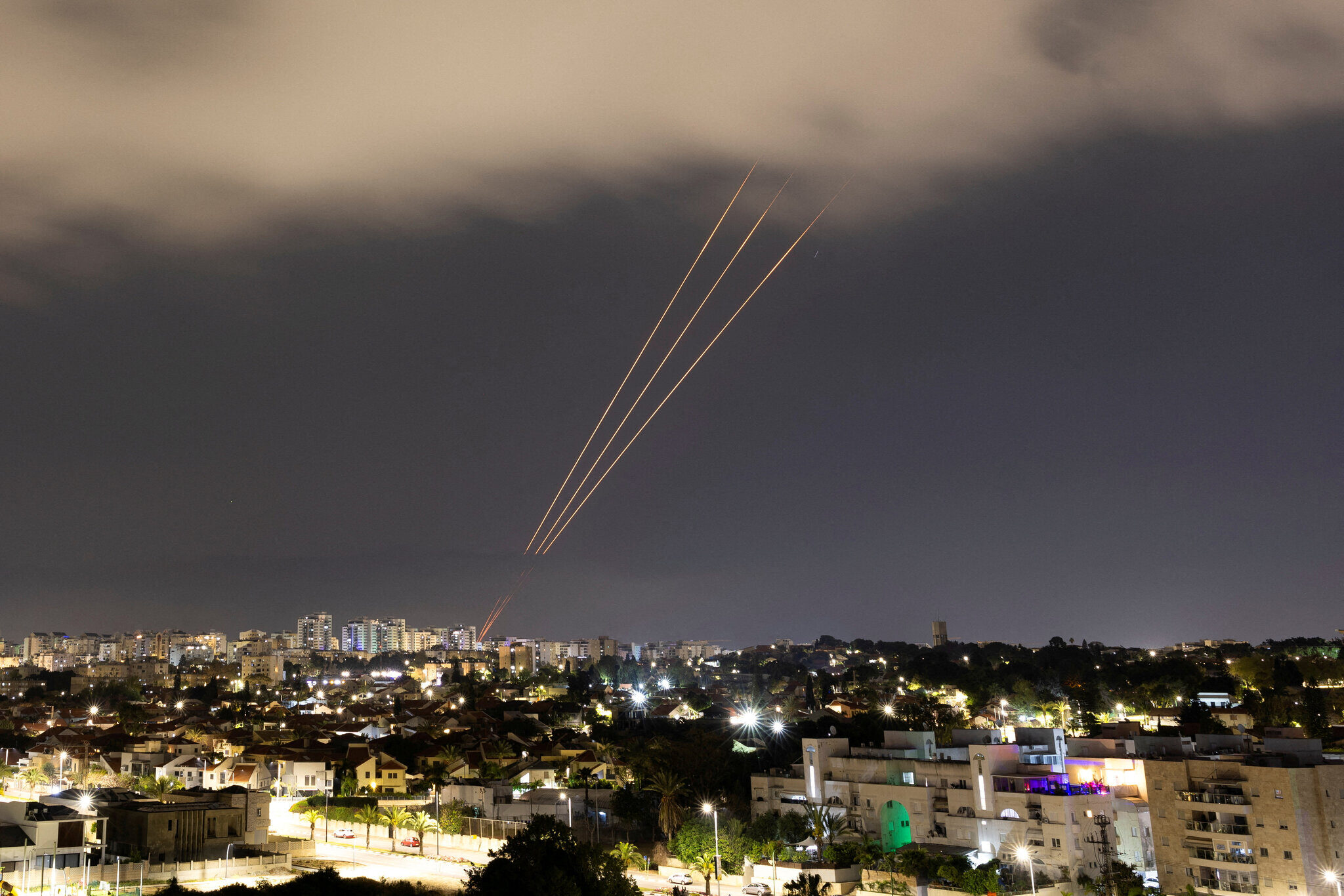
June 2025 brought the twelve-day Israel–Iran war — strikes on nuclear facilities and IRGC leadership, Iranian missile barrages, and a ceasefire that left the regime standing but visibly degraded. During and after the war Pahlavi held a high-profile Paris press conference declaring the regime in its “final phase,” announcing readiness to lead a transition, and appealing for defections — his most explicit leadership claim to that date. Critics, including within the opposition, attacked the timing as riding foreign bombs to power; supporters called it the responsible preparation the moment demanded. In September 2025 the E3 triggered the UN snapback mechanism, restoring international sanctions — a diplomatic outcome the movement and NUFDI had campaigned for and could legitimately count as an advocacy success, whatever one thinks of sanctions’ humanitarian incidence.
Through late 2025, protests inside Iran resumed in waves — economic, labour (truckers, nurses, pensioners), and political — under blackout conditions that make scale assessment genuinely difficult. The movement claimed growing domestic coordination; independent verification of organised monarchist networks inside Iran remained, and remains, thin. That evidentiary gap matters and recurs below.
Part IX: 2026 — Massacre, War and the Leadership Claim
The events of 2026 require careful chronology, because the movement’s current status is inseparable from them.
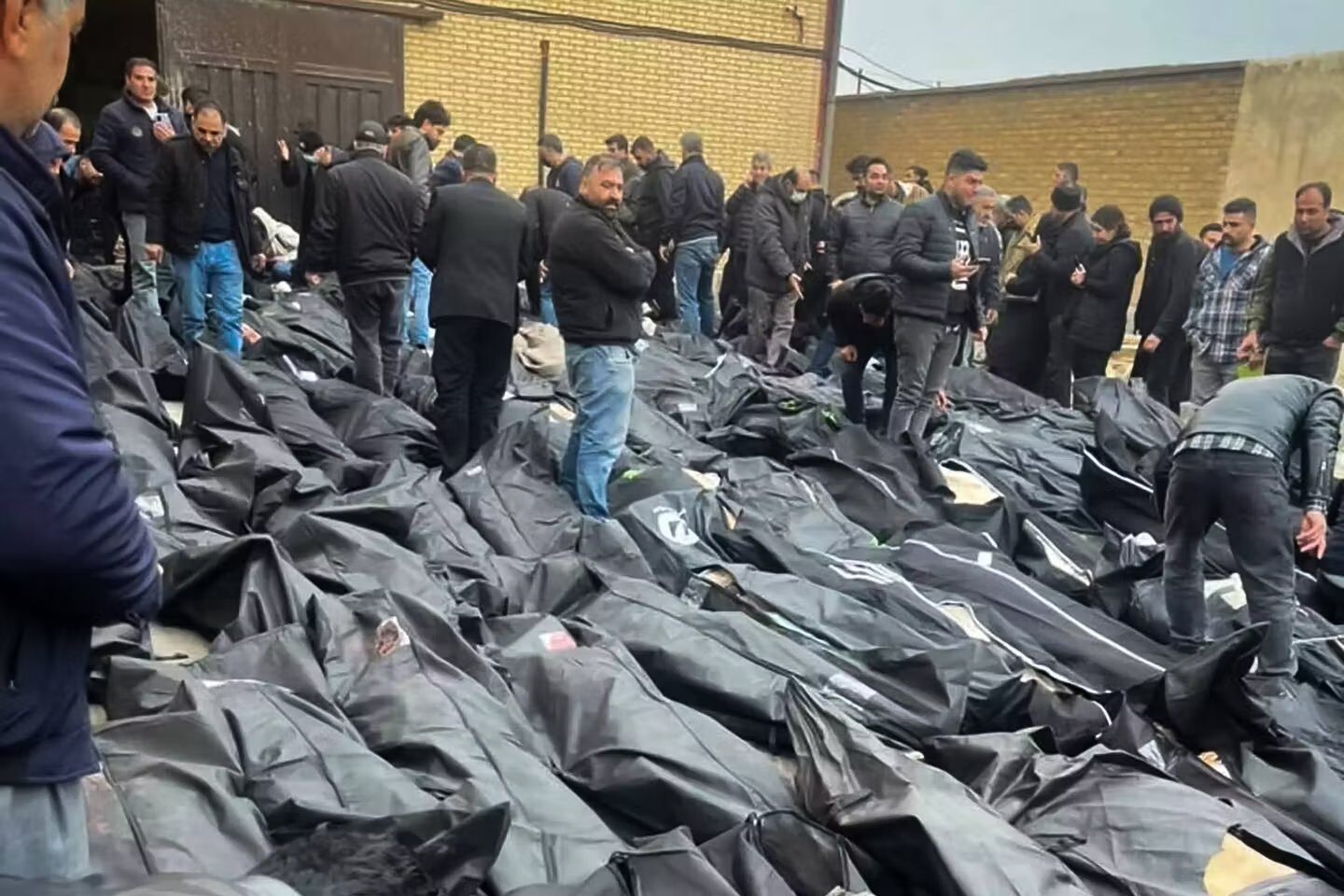
On 8–9 January 2026, security forces carried out mass unlawful killings of demonstrators during nationwide protests under a near-total internet blackout — the “January massacres” that became this cycle’s Bloody Aban, at a scale that dwarfed it. The true toll remains contested precisely because of the blackout, and honest treatment requires the full range with sources attached: the government itself has admitted roughly 3,100 deaths; rights monitors such as HRANA had individually verified around 6,500–7,000 by February, with thousands of cases still under review; Time, citing two senior Health Ministry officials and compiled hospital data, reported that over 30,000 may have been killed on 8–9 January alone — a figure notable because its sources were regime insiders; a doctors’ network cited by The Guardian reached a similar order of magnitude; the UN Special Rapporteur on Iran put verified deaths at least at 5,000 with a possible toll as high as 20,000; and Iran International, citing documents it reviewed but did not publish, put the two-day toll above 36,500, a claim of unprecedented scale whose non-transparent sourcing drew criticism from Al Jazeera. At the top of the range sit two political figures: Reza Pahlavi, who told the Sunday Times on 24 January that activists, political prisoners, and medical authorities inside Iran put the total toll at roughly 50,000, including some 15,000 in Tehran; and President Trump, whose publicly stated figure escalated without explanation from 32,000 in February to 42,000 and then to “52,000-plus” by July, never with a cited source. Skeptics note the unexplained escalation and the political interest both men hold in the highest numbers; the movement’s supporters read a US president’s repeated adoption of such figures as implicit confirmation from intelligence channels. Neither reading can currently be verified, which is precisely why the tiering matters. New names continue to be identified and the verified count continues to rise months later, meaning every figure above is a floor of a different evidentiary grade rather than a final number. Even at the lowest bound the killings rank among the largest massacres in modern Iranian history; at the insider-sourced estimates they are the deadliest two-day suppression of street protests on record anywhere. The killings triggered global outrage and, notably, silence from parts of the Western left that the movement’s supporters have documented pointedly. On 14 February, Pahlavi’s call for a Global Day of Action produced the largest coordinated diaspora demonstrations ever held — dozens of cities, with the Munich rally coinciding with the Security Conference, where Pahlavi again appeared. A striking feature of the Munich event, noted by outside observers: former leftist and even Islamist political prisoners appeared as speakers endorsing his transitional leadership role while explicitly not endorsing monarchy — precisely the separation of “transition figure” from “future system” the movement had long sought to establish.
On 28 February 2026, after the collapse of nuclear ultimatums, the United States and Israel launched large-scale strikes on Iran (Operation Epic Fury / Rising Lion’s successor operations). The opening strikes killed Supreme Leader Ali Khamenei along with much of the senior command. The regime formed an Interim Leadership Council within a day and, on 9 March, the Assembly of Experts named Mojtaba Khamenei Supreme Leader — a succession shadowed from the start by questions about his authority, visibility, and even his condition, which remain subjects of open-source dispute.
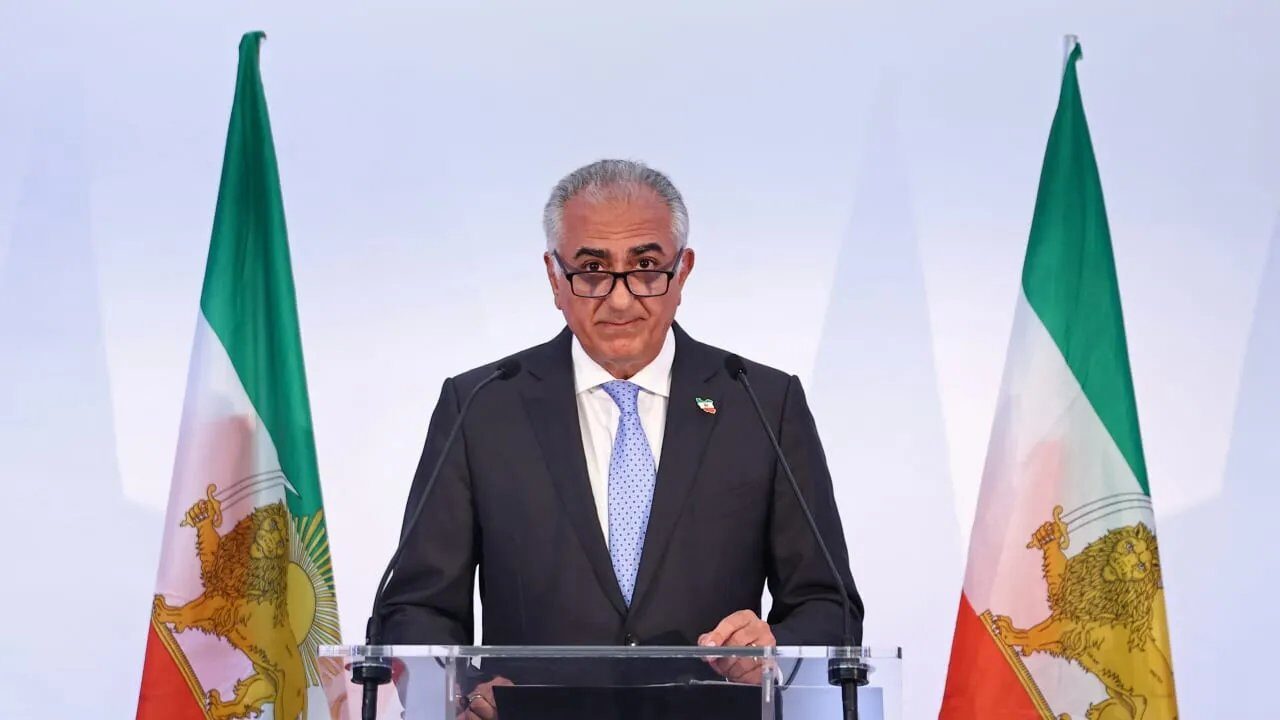
Pahlavi moved immediately to occupy the political vacuum. Days into the war he declared that Iranians had called on him to lead the transition, and on 14 March he announced that a “transitional system” under his leadership — staffed by “capable individuals” identified inside and outside the country — stood ready to assume administration of the state the moment the Islamic Republic fell, promising order, security, a new constitution drafted and ratified by referendum, and internationally supervised elections, after which the transitional government would dissolve. He gave a widely viewed 60 Minutes interview making the democratic-transition case to American audiences, spoke at CPAC in Texas on 28 March — urging the Trump administration to reject any deal with the regime, to chants of “Long live the king” from parts of the audience — and undertook a spring European tour meeting officials and diaspora crowds amid both large rallies and organised counter-protests.
The transitional system also began sprouting institutional limbs: around 16 March, a transitional justice drafting committee was announced whose reported members included Nobel laureate Shirin Ebadi — a name whose participation, given her republican and human-rights credentials and her distance from the movement after 2023, signalled that the structure was attracting figures beyond the monarchist core.
The war itself did not deliver the collapse. A Pakistan-brokered ceasefire took hold from around 8 April; Vance-led talks in Islamabad (11–12 April, the highest-level direct US–Iran engagement since 1979) eventually produced the 14-point Islamabad Memorandum in mid-June, trading ceasefire consolidation and blockade relief for constraints Tehran soon contested; and by mid-July the MOU had broken down — Iran suspended its commitments, strikes and retaliation resumed, and US service members were killed at a Jordanian base. As of this writing, the Islamic Republic under Mojtaba Khamenei survives, degraded, sanctioned, and internally contested; the transitional system waits; and the question this article must now assess is what the leadership claim actually amounts to.
Part X: The Transitional System Claim — An Honest Assessment
The claim deserves to be evaluated on its own terms, then stress-tested.
The case for it. First, someone must make it. The single strongest argument for a declared transitional structure is the alternative: a decapitated state with no prepared successor invites civil war, warlordism, or a military junta — outcomes every Iranian faction claims to fear. Libya is the example the movement’s planners cite constantly, and it is a fair one. Second, the claim is procedurally self-limiting on paper: a time-bound mandate, a constituent process, a referendum in which monarchy is one option among several, dissolution upon elections. Third, Pahlavi has a genuine, measurable plurality constituency (Part XI) — more than any rival can demonstrate — and by 2026 had assembled endorsements across ideological lines, including former political prisoners of the left, specifically for the transitional role. Fourth, Western openness to him, whatever its motives, is a real asset: transitions need recognition, unfrozen assets, and interim legitimacy, and no other Iranian figure could obtain them as quickly.
The case against it. First, the mandate problem: no mechanism exists by which “the Iranian people” have called on him — hashtags, rallies, and opt-in polls are indicators, not authorisations, and the claim’s central sentence is unfalsifiable. Second, the capability problem: a transitional government requires levers inside the country — command over armed formations, civil-service cooperation, strike committees, local councils. Public evidence that the transitional system possesses any of these is minimal; its identified personnel remain largely abroad or unnamed for security reasons, which may be prudent but is also conveniently unverifiable. Third, the association problem: the claim was announced during a foreign bombing campaign, praised by and praising the US administration conducting it, and celebrated at a partisan American conference. However unfair the “foreign puppet” label may be to a man whose positions predate this war by decades, the optics have measurable costs inside a nationalist society. The rally-around-the-flag effect under bombardment was documented in 2026 as in 2025: some regime opponents suspended their opposition, others distinguished between celebrating Khamenei’s death and accepting foreign strikes on their country, and state media worked relentlessly to fuse Pahlavi with the bombs falling on Iranian cities. The movement’s counter-messaging — that the regime, not the opposition, imported the war through its nuclear brinkmanship and regional adventurism — is a coherent argument that GAMAAN’s wartime data suggests retained much of his base, but there is little evidence it converted the alienated middle, and the movement never fully separated its cause from the campaign in the public mind. Two fairness notes belong here. First, many critics apply a conspicuously lower bar to other opposition figures’ Western contacts, funding, and platform access than to Pahlavi’s; the standard should be consistent. Second, the January massacres complicate the nationalist critique from the other direction — for a substantial share of Iranians, a regime that had just killed protesters by the tens of thousands had forfeited the standing to invoke national unity against external attack, and this is precisely the divide the polling reflects. Fourth, the concentration problem: every safeguard in the plan — dissolution, referendum, neutrality on the outcome — depends on the voluntary restraint of the person holding transitional power, in a country whose entire modern history is a lesson in what happens to such promises. Skeptics do not need to doubt Pahlavi’s sincerity to note that institutions, not intentions, are the only real safeguard, and the transitional system as published is thin on institutional checks against itself.
A balanced verdict: the transitional system is simultaneously the most serious piece of succession planning any Iranian opposition force has produced and an untested paper structure whose legitimacy claim outruns its demonstrated capacity. Both halves of that sentence are true, and analysis that drops either half is advocacy.
Part XI: The Support Base — What the Numbers Do and Don’t Show
The best available systematic data comes from GAMAAN (Group for Analysing and Measuring Attitudes in Iran), whose surveys from 2022 through 2025–2026 consistently found Reza Pahlavi the most popular named opposition figure — typically chosen by roughly a third of respondents as a first or second choice for a leadership role, with favourable views around the mid-40s percent and unfavourable around the high-20s in later waves. GAMAAN’s July 2026 wave on attitudes toward the protests and the war confirmed the pattern’s stability under fire: around 45% consistently positive toward Pahlavi and around 28% consistently negative, with limited net decline despite the war-association risk — while surveys conducted amid the 2026 crisis found roughly half of respondents fully or partially supporting a transitional leadership role for him, with about a third opposed. The slogans data adds useful texture: “Reza Shah, rouhet shad” commands broad agreement well beyond the movement’s core, while explicitly restorationist slogans about Pahlavi’s return divide even sympathetic respondents — evidence that nostalgia for the era travels further than the demand for the dynasty. On the system question, GAMAAN’s waves have shown constitutional or federal monarchy preferred by around a fifth of respondents, a secular republic somewhat higher, large undecided shares, and — the one finding with supermajority consistency — rejection of the Islamic Republic itself. [Figures should be re-verified against the specific wave cited, with fieldwork dates, before publication.]
Three caveats are mandatory for honest use of this data. First, methodology: GAMAAN uses online, opt-in sampling recruited through social media and VPN-dependent channels, reweighed to census demographics. This is arguably the only feasible method under a repressive state that bans independent polling — and GAMAAN publishes its methodology openly — but opt-in internet samples plausibly over-represent the connected, the urban, the young-to-middle-aged, and the oppositional, and reweighting cannot fully correct self-selection. Competing data points exist: regime-linked pollsters (ISPA and others) produce very different pictures and have their own, worse, credibility problems; Western-run phone surveys (e.g., Stasis) have sometimes found lower opposition-figure recognition. The honest position is that all Iran polling operates under severe constraints, GAMAAN is the most transparent of the available options, and its findings should be reported with their method attached, not as settled fact.
Second, distribution: Pahlavi’s support skews male, older, and less concentrated among the university-educated, and is markedly weaker in Kurdish, Baluch, and parts of Azeri-majority regions — precisely the areas that bore the heaviest repression in 2022 and 2026. The mismatch is not incidental: the 2022 uprising and the 2025–26 protest wave were disproportionately driven by Gen Z and by women — the demographics where the movement polls weakest — and were ignited in Kurdistan and Baluchistan, the regions where it polls weakest geographically. A movement structurally strongest among those least likely to be on the street, and weakest among those actually leading the confrontation, has a representativeness problem that no plurality figure resolves.
Third, the plurality/majority distinction: being the most popular single figure in a fragmented field is compatible with majority opposition to one’s leadership. Roughly a third enthusiastic, a third opposed, a third undecided or indifferent is a strong political position — and a weak revolutionary mandate. Both the movement’s boosters (who read plurality as consensus) and its detractors (who read polarisation as marginality) routinely misstate this.
Part XII: The Comparative Field
The movement’s standing can only be judged against its actual competitors.
Republicans and civic figures. The republican current — Esmaeilion’s circle, secular-left networks, civil-society figures, and much of the human-rights community — commands moral authority, intellectual output, and credibility with Western progressive institutions, but has never solved its collective-action problem: no single figure, no unified structure, no equivalent of the IPP, and recognition numbers far below Pahlavi’s. Its critique of the monarchists is often sharper than its own alternative.
Ethnic and regional parties. Kurdish parties (KDPI, Komala factions, PJAK’s separate track) and Baluch actors possess what the monarchists lack — organised cadres, some armed capacity, and deep local legitimacy — and lack what the monarchists have: national reach and international mainstream access. The 2023 Mohtadi episode poisoned the most promising bridge. Mutual suspicion over decentralisation versus “territorial integrity” rhetoric remains the deepest structural fault line in the entire opposition, and the transitional system’s viability in the periphery depends on repairing it.
The MEK. The Mojahedin-e Khalq retains money, organisation, and lobbying reach, and essentially no measurable support inside Iran, where its history — sides taken in the war with Iraq foremost — makes it toxic across the spectrum. Its main effect on the Pahlavi movement is as a smear vector: “MEK” functions as an all-purpose accusation in intra-opposition fights, degrading discourse on all sides.
Reformists and system insiders. The reformist current is politically spent as an opposition force, but its remnants — and pragmatist insiders eyeing the post-Khamenei order — matter enormously as potential defectors. The movement’s “maximum defections” pillar implicitly recognises that the transition will be decided less by exiles than by which insiders jump, when, and to whom. Whether mid-level commanders and administrators would jump to a Pahlavi-led structure, a military caretaker, or a negotiated internal successor is the great unknown of 2026, and no faction has public evidence of commitments.
Part XIII: The Ledger — What Worked, What Failed
What the movement did relatively well, with evidence:
- Message discipline at the principal level. Across a decade of statements, Pahlavi’s core line — secular democracy, referendum, non-retribution for the rank-and-file, territorial integrity — has been remarkably consistent, surviving even the temptation of the 2026 vacuum. Opponents dispute his sincerity; they cannot easily dispute his consistency.
- Planning for the day after. The IPP and the transitional framework, whatever their enforceability, are the only detailed succession documents in the field, and they shifted the entire opposition conversation toward transition mechanics.
- International positioning. IRGC-designation campaigns (the UK’s 2026 designation among the outcomes advocacy contributed to), the snapback push, security-conference presence, and the Israel track gave the movement state-level interlocutors no rival has.
- Diaspora mobilisation. From Berlin 2022 to the February 2026 Global Day of Action, the movement demonstrated a repeatable capacity to put historically unprecedented numbers on the street abroad — a real signal, even discounting its limits as a proxy for domestic opinion.
- Capturing the nostalgia dividend. The movement successfully converted a diffuse popular reassessment of the pre-1979 era — which it did not create — into political capital attached to a living figure.
Where it failed or remains unproven, with evidence:
- Coalition-building. Georgetown’s ten-week lifespan, the vekalat backlash, the Mohtadi affair, and the serial estrangement of natural allies (Alinejad, Esmaeilion, republican intellectuals) constitute a documented pattern, not an isolated incident. The common factor across accounts is the conduct of the surrounding circle and base, and the principal’s reluctance to police it publicly. In fairness, the failure is not unique to this movement: no rival current built a durable alternative coalition either, and the republicans’ own unity attempts collapsed with less scrutiny. But the movement claiming transitional leadership invites the higher standard it is judged by.
- Domestic organisation. This is the binding constraint, and it should be stated bluntly: after four years of “maximum organisation,” and as of August 2026 — six months after the war began and seven after the massacres — there is no robust public evidence that monarchist strike committees, coordination networks, or parallel structures inside Iran activated in any way that altered battlefield or post-strike dynamics. The moment the claimed networks existed for came, and they were not visibly there. Secrecy explains some of this gap; it cannot be assumed to explain all of it. The narrative, meanwhile, continues in real time: on 2 August 2026, Pahlavi’s official press office amplified a New York Post report by David Spector in which two anonymous “field leaders” of what the post called the National Lion and Sun Revolution, plus one journalist speaking from inside Iran via VPN, described an underground studying the tactics of the Dey uprising, concealing rudimentary tools for street resistance across the country, and preparing a “final, decisive” confrontation — “either this regime goes, or we do.” The sourcing chain deserves to be stated plainly: an opposition press office promoting a sympathetic outlet’s account of unnamed sources whose claims cannot be independently corroborated under blackout conditions. That does not make the claims false — anonymous sourcing is how genuine undergrounds necessarily speak, and the personal risk taken to speak at all is real. It does make them unverified, and the pattern is the point: four years into “maximum organisation,” the public evidence for in-country capacity still consists of the movement’s own amplification of claims no one can check. Readers should hold both possibilities — a real network protecting itself, or a narrative sustaining itself — until conduct on the ground settles the question, because nothing else can.
- Defections. The “maximum defections” pillar can now be scored against events: through Khamenei’s killing, the succession, and months of degradation, the security apparatus has largely held under Mojtaba. There have been resignations, disappearances from public life, and reported lower-level desertions under blackout conditions, but no publicly confirmed mid-to-senior commander has defected to the transitional system. Either the pipelines do not exist, or they are waiting for a collapse they will not themselves trigger — a distinction that matters enormously and cannot currently be resolved from open sources.
- The periphery. Weakness among Kurds, Baluch, and women relative to the national average persisted across every measurement wave, and the movement’s nationalist rhetoric periodically deepened it.
- Partisan capture abroad. Alignment with one US political faction — CPAC, explicit praise for the administration’s strikes — bought access at the price of hostage-taking: the movement’s fortunes are now partially indexed to American electoral politics and to a war whose civilian costs Iranians, not exiles, are paying. This is the single largest strategic gamble taken since 2022, and its wisdom is genuinely undecidable as of mid-2026.
- The verification gap. On its central claims — mandate, defection pipelines, in-country personnel — the movement asks for trust where it cannot show evidence. Its opponents exploit this; its supporters wave it away; a serious analysis records it as an open liability.
Part XIV: Pathways and Lessons
What would greater success require? Not more visibility — that resource is maxed out. The binding constraints are elsewhere.
Repair the periphery, in deeds. Explicit, negotiated guarantees on decentralisation, language and cultural rights, and non-retribution — agreed with actual Kurdish and Baluch parties, not proclaimed at them — would address the movement’s deepest legitimacy gap. Red lines against armed secessionism can be maintained while doing this; the 2026 Munich precedent of transitional-role endorsements without system endorsements shows the formula exists.
Institutionalise the safeguards. Publishing binding transitional checks — an independent transitional council with removal powers, fixed sunset clauses, international monitoring commitments signed in advance — would convert “trust me” into “verify me,” and would cost the movement nothing unless the skeptics are right about it.
Police the circle. A public code of conduct for affiliated figures, enforced by visible removals, would do more for coalition prospects than any charter. The evidence of a decade is that this, not ideology, is what breaks alliances.
Rebalance the foreign file. Targeted-pressure advocacy (repression-apparatus sanctions, asset accountability, internet freedom, labour support) sustains international leverage with far less domestic blowback than open alignment with a bombing campaign and one US party. Bipartisan and cross-European hedging is basic risk management the movement has neglected.
Invest downward, not outward. Secure communications, strike funds, legal support, and logistics for in-country actors — the unglamorous infrastructure of every successful transition from Poland to Chile — would begin closing the capability gap that no press conference can.
The broader lessons exceed this movement. Exile politics can preserve symbols, ideas, and international access across generations — the Pahlavi case proves it — but symbols do not organise general strikes, and the gravitational pull of diaspora audiences, donor politics, and host-country agendas systematically distorts exile strategy toward visibility over capacity. Repression, meanwhile, does not destroy opposition sentiment; it atomises it, ensuring that when openings come, the actors best positioned to exploit them are those with organisation — historically, armed forces and clergy — rather than those with popularity. The Islamic Republic itself won in 1979 partly because its network of mosques outorganised every rival. The question that will decide the Pahlavi movement’s place in history is whether it absorbed that lesson from its own family’s defeat.
Conclusion
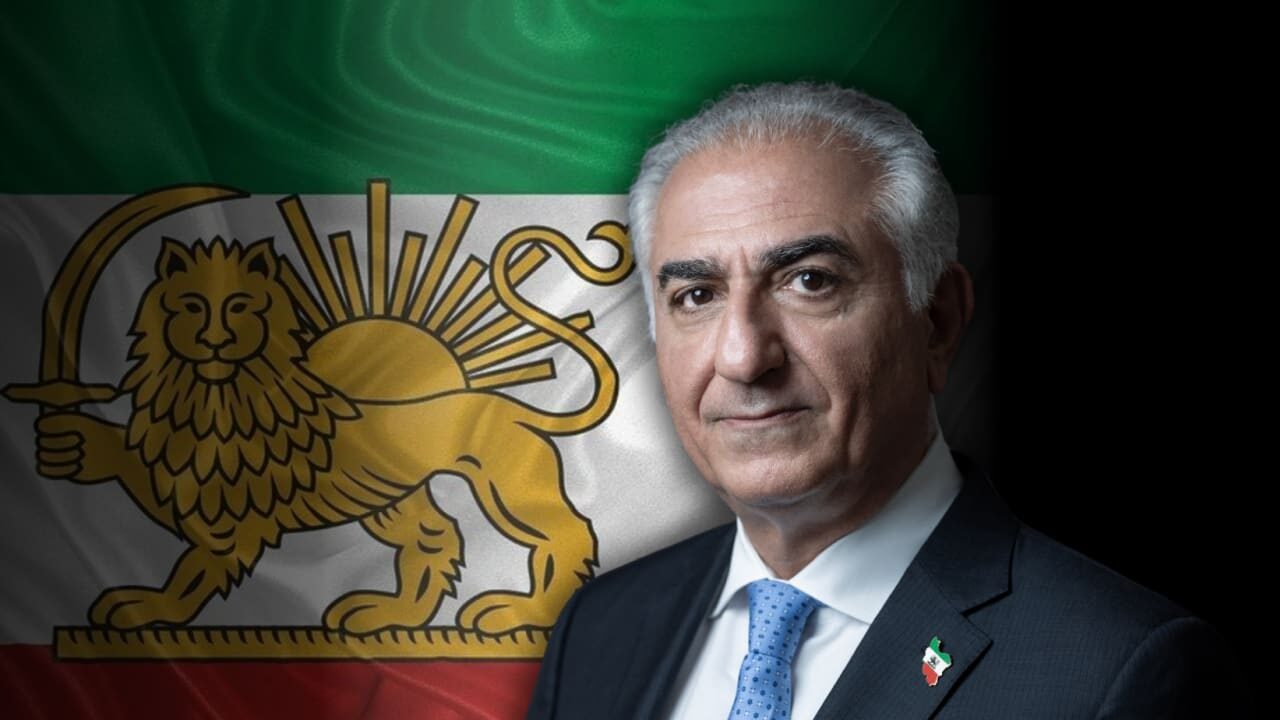
Between the fuel protests of 2019 and the war of 2026, the Pahlavi movement travelled from nostalgic remnant to the single most recognisable force in Iran’s opposition, produced the field’s only serious transition planning, achieved unprecedented international standing, and mobilised the largest diaspora demonstrations in Iranian history. Over the same period it destroyed or lost every coalition it entered, failed to demonstrate organised capacity inside Iran, remained structurally weak among the young, women, and the ethnic periphery, and tied its fortunes to a foreign war and a foreign political faction. The regime it opposes is weaker than at any point since 1979 — decapitated, sanctioned, and ruling a population that rejects it by every credible measure. That opening is real, and it was created principally by the Islamic Republic’s own failures and by the courage of people inside Iran. Whether the transitional system fills the opening, or becomes another exile government that history bypassed, will be decided by the unglamorous variables: who organises inside the country, which insiders defect and to whom, and whether a movement built around one man’s name can build institutions bigger than it. The evidence of 2019–2026 supports neither dismissal nor confidence. It supports watching what the movement does next about its known weaknesses — because they are known, not least to the movement itself.
Sourcing note: Claims in this article should be anchored, at publication, to primary sources — Pahlavi’s dated statements and the published IPP documents; GAMAAN survey reports with fieldwork dates and methodology; Reuters and Amnesty on Aban 1398 casualty figures; contemporaneous reporting on Georgetown, the Mahsa Charter, and members’ resignation statements; and dated 2026 war chronologies for the February–July sequence. Figures marked [verify] require confirmation against the cited source before publication. Contested characterisations (advisor conduct, bot amplification, in-country capacity) are presented with their evidentiary status stated, and should remain so in any edit.