
The Quds Force founder, AMIA fugitive, and the man now running Iran’s war
Evidence key — every claim in this file is graded:
- [DOCUMENTED] — court records, Interpol notices, sanctions listings, memoirs, official announcements, or on-the-record statements
- [REPORTED] — credible journalism citing named or anonymous officials; not independently provable
- [ALLEGED] — claims by interested parties, intelligence officials via advocacy organisations, or single sources
- [DISPUTED] — sources genuinely conflict
Why this file exists
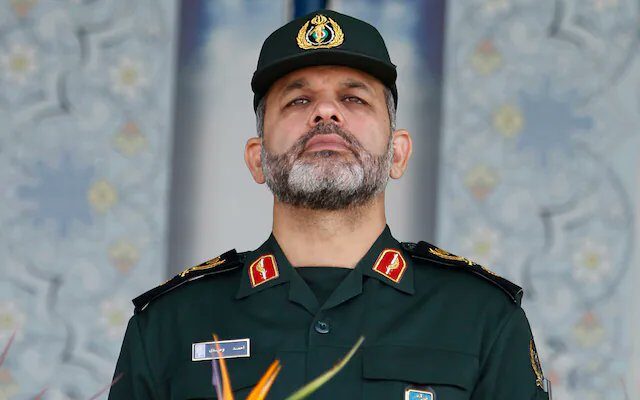
Since March 2026, the most consequential man in Iran has arguably not been its president, its foreign minister, or even its secluded new Supreme Leader. It has been a 68-year-old brigadier general whom Interpol has wanted for nearly two decades over the deadliest terror attack in Argentina’s history.
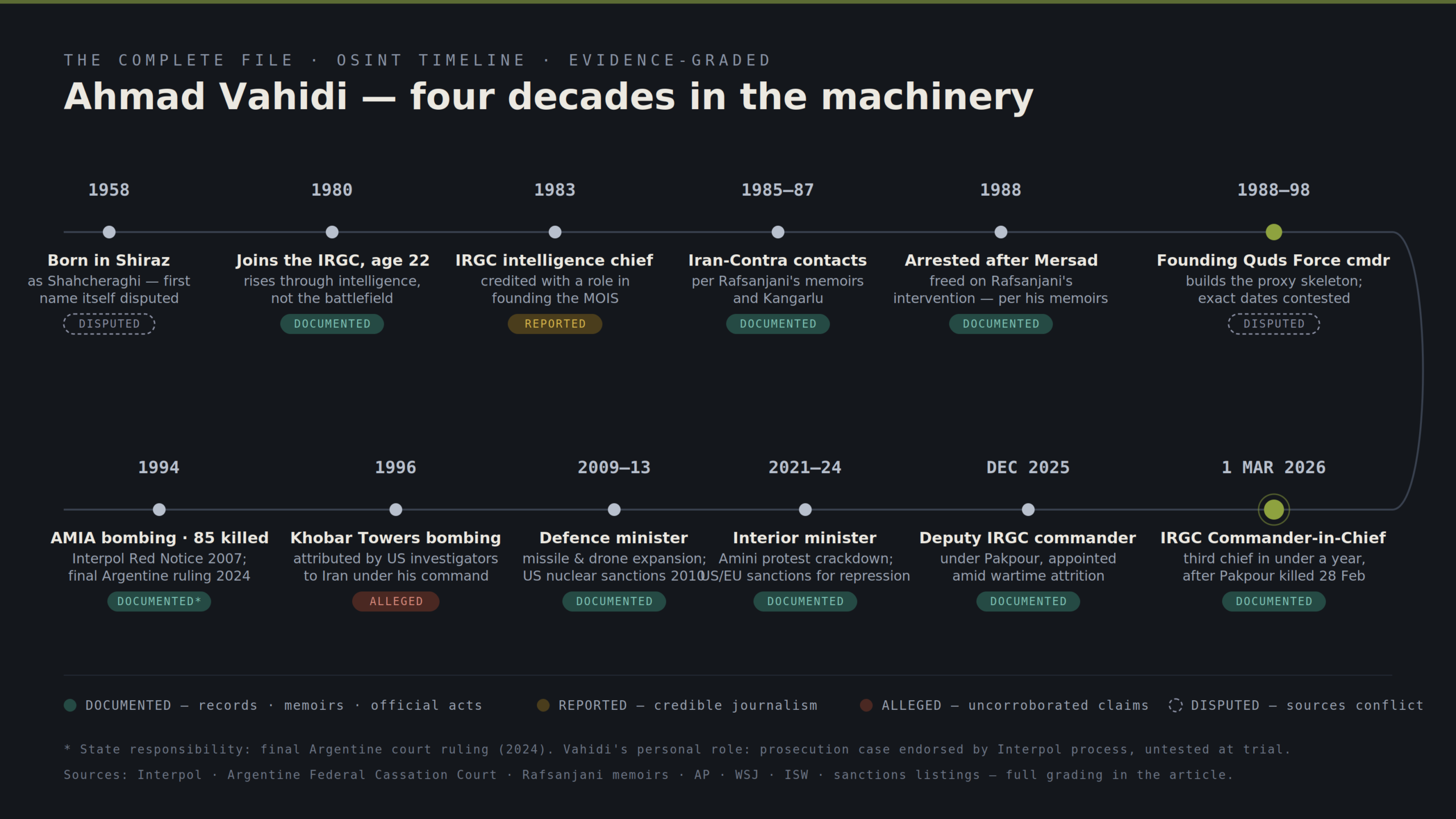
Ahmad Vahidi became Commander-in-Chief of the Islamic Revolutionary Guard Corps on 1 March 2026, after his predecessor Mohammad Pakpour was killed in the joint US-Israeli strikes of 28 February — the same strikes that killed Supreme Leader Ali Khamenei [DOCUMENTED — official Iranian announcements; widely reported]. Pakpour had held the job less than nine months, having himself replaced Hossein Salami, killed in the 12-day war of June 2025. Vahidi is the third IRGC chief in under a year, and by multiple credible accounts he now shapes not only Iran’s military response but its negotiating position with the United States.
Profiles of Vahidi exist — wire pieces, think-tank dossiers, explainers. None of them assembles the full record in one place. This file does. Where sources conflict, I say so. Where a claim rests on anonymous officials or advocacy research, it is labelled. Iran’s denials are included.
Part I — Early life and the war years (1958–1988)
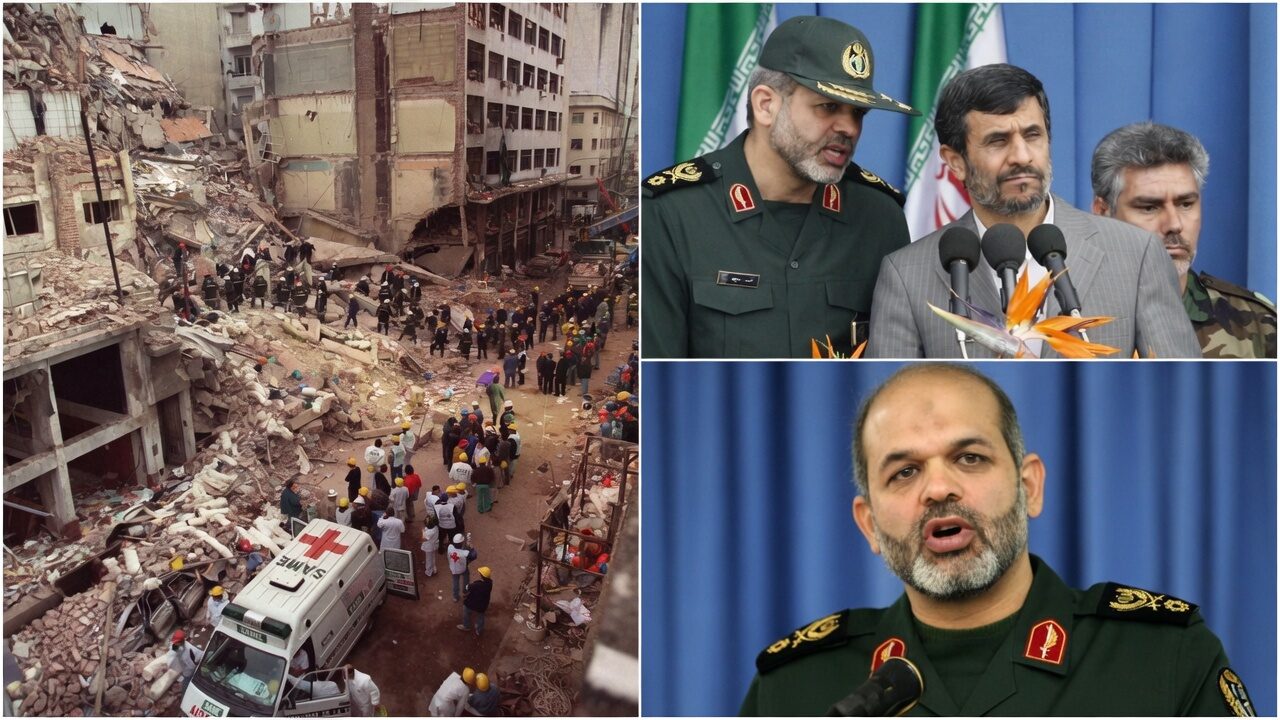
Vahidi was born on 27 June 1958 in Shiraz. His birth name was not Ahmad Vahidi: English Wikipedia, Euronews, and the Arabic encyclopaedia Marefa give it as Vahid Shahcheraghi, while the Associated Press and some Persian outlets (e.g. Eghtesad Online) render it Ahmad Shahcheraghi [DISPUTED — with AP’s Gulf bureau on one side and Wikipedia’s sourcing on the other, the discrepancy itself is a small window into how thin the public record on him is]. The adopted name “Vahidi” is a nom de guerre from the revolutionary period.
His education, per his official biography as carried across Persian outlets (Jamaran, Rokna, Salameno and others): a bachelor’s degree in electronics engineering from Amirkabir University of Technology (admitted 1976, aged 18), a master’s in industrial engineering from Iran University of Science and Technology, and a doctorate in strategic studies from Imam Sadiq University [DOCUMENTED — consistent across Iranian outlets’ official bios; note this is the regime’s own account of his credentials]. Per Rokna’s biography, he joined the IRGC in 1980, aged 22, before completing his studies [REPORTED].
He joined the IRGC in 1980, a year after the revolution [DOCUMENTED]. His rise was fast and ran through intelligence, not the battlefield. According to IRGC-affiliated Tasnim News (via UANI’s dossier), he was appointed deputy for internal security in the IRGC’s intelligence unit and then intelligence chief in 1983, holding the post to the end of the Iran-Iraq War. Akbar Barati, an early IRGC intelligence commander, has said in an interview that Vahidi arrived in the role without real intelligence experience, though he credited his willingness to learn [REPORTED — regime-affiliated media, so treat as the sanctioned version of his own career]. Several accounts also credit him with a role in establishing the Ministry of Intelligence (MOIS) in 1983 [REPORTED].
The Iran-Contra footnote. Two independent lines of evidence now place Vahidi in the covert arms-for-hostages contacts with Washington. Mohsen Kangarlu — the Iranian official who coordinated the talks — has said Vahidi represented the IRGC in negotiations with the Reagan administration between 1985 and 1987, and, per the Associated Press, Rafsanjani stated in his autobiography that Vahidi was involved in the Iran-Contra affair [DOCUMENTED — memoir of a principal, corroborated by a named participant]. PBS Frontline’s Tehran Bureau reconstruction of the 1986 McFarlane mission describes the Iranian leadership deciding against meeting the American delegation directly, channelling contact through intermediaries. Ali Alfoneh of the Arab Gulf States Institute told Al Jazeera in 2026 that these contacts left Vahidi intimately acquainted with how Israel and the US operate — a striking counterpoint to the pure-ideologue portrait [REPORTED].
The arrest that nearly ended everything. In July 1988, the MEK’s Iraqi-backed offensive (Operation Forough Javidan, crushed by Iran’s Operation Mersad) drove toward Kermanshah — the province where Vahidi was the responsible military commander. In the aftermath, he was arrested by military police. We know this from an unimpeachable source: Akbar Hashemi Rafsanjani’s own memoirs, in which he recounts ordering military judicial officials to release Vahidi over the objections of IRGC commanders, and pressuring then-IRGC chief Mohsen Rezaei into retracting charges over Vahidi’s performance during the offensive [DOCUMENTED — memoir of a direct participant]. A career that would later span the Quds Force, two ministries, and command of the IRGC survived on Rafsanjani’s intervention.
Part II — The Quds Force years and the birth of the “Axis” (1988–1998)
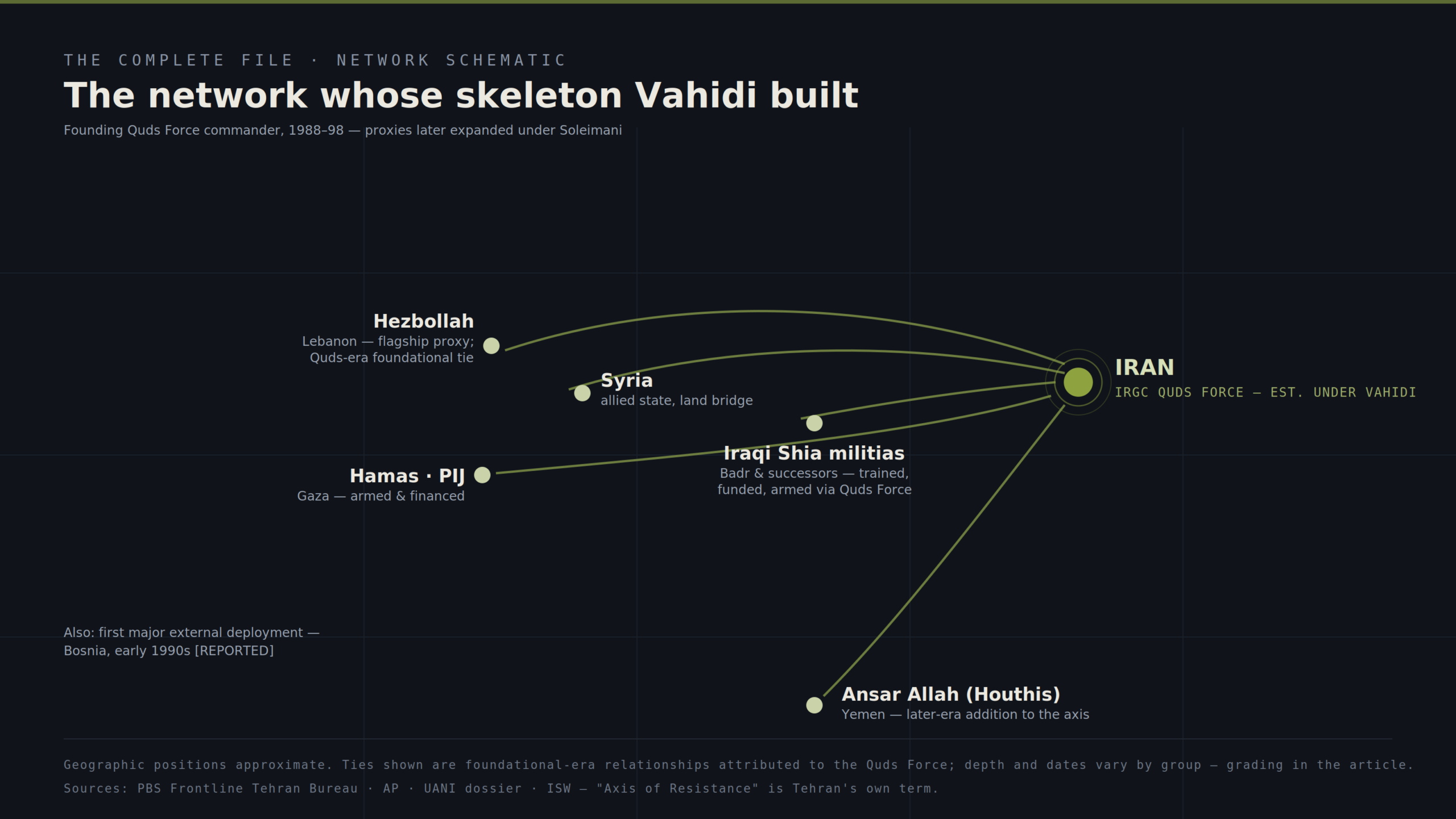
Vahidi was the founding commander of the Quds Force, the IRGC’s extraterritorial arm for proxy warfare, foreign operations, and intelligence. The dates are genuinely contested: Persian Wikipedia gives 1988–1997; The Media Line says 1988–1998; PBS Frontline notes it is widely believed Khamenei formalised the appointment around 1990, with Vahidi serving until 1997 — and that the role does not appear in his official regime biography at all [DISPUTED — safest formulation: from the force’s consolidation (1988–90) until 1997–98, when Qassem Soleimani succeeded him].
What is not disputed is what the Quds Force became under and after him: the training, funding, and armament pipeline for Hezbollah in Lebanon, Shia militias in Iraq, and eventually the wider network Tehran calls the Axis of Resistance. Soleimani made the force famous; Vahidi built its skeleton. UANI’s dossier records the force’s first major external deployment as the Bosnian war in the early 1990s [REPORTED].
The al-Qaeda allegation. The most serious claim from this period, and one no wire profile touches: US intelligence officials cited in UANI’s dossier allege that Vahidi established a tactical alliance with senior al-Qaeda figures in Sudan in the 1990s and met Ayman al-Zawahiri several times, and a European intelligence official claims Zawahiri drew on that old relationship to negotiate refuge for al-Qaeda figures in 2001 [ALLEGED — anonymous intelligence officials, relayed by an advocacy organisation; I include it because it circulates, and it should not circulate without this label].
Part III — AMIA, 18 July 1994
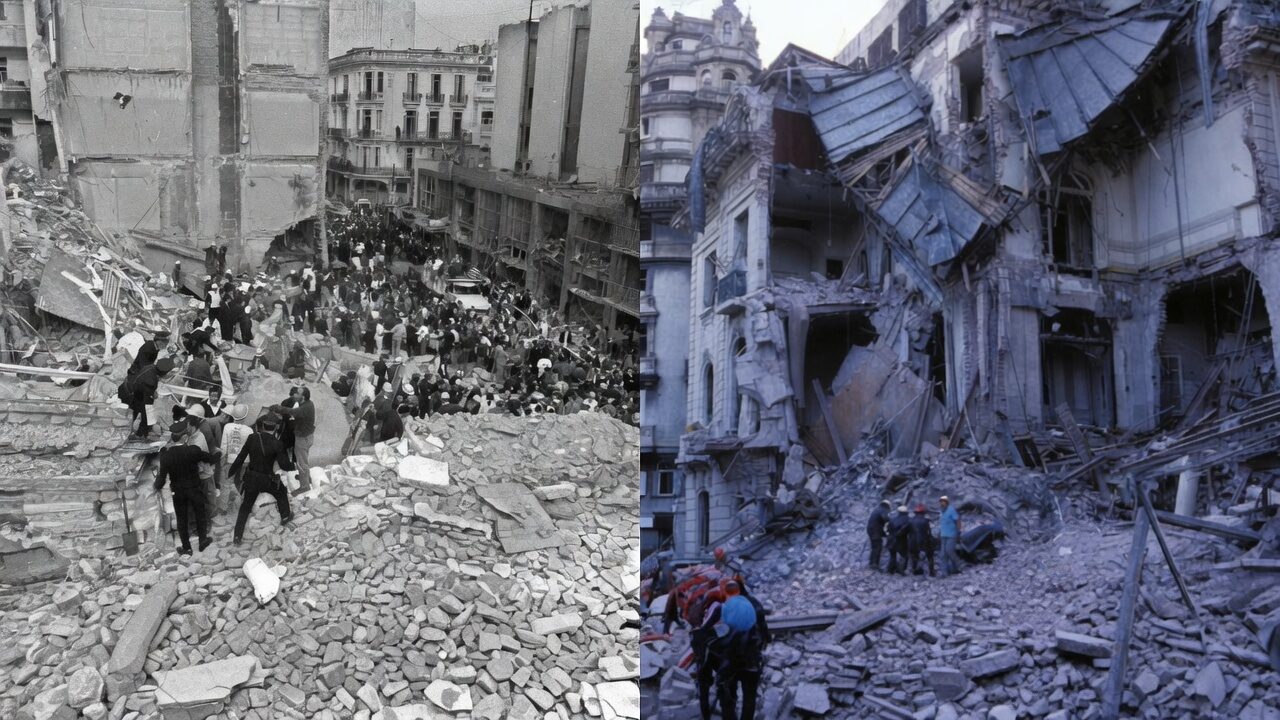
On 18 July 1994, a van bomb destroyed the AMIA Jewish community centre in Buenos Aires, killing 85 people and injuring some 300 — the deadliest terror attack in Argentine history, thirty-two years ago yesterday.
The judicial record, in sequence:
- November 2006: Argentina asked Interpol to issue Red Notices for nine individuals over the bombing. Iran formally challenged the request [DOCUMENTED — Interpol statements].
- 2007: Interpol’s Executive Committee, and then its General Assembly on 7 November 2007, approved Red Notices for six men: Imad Mughniyah, Ali Fallahian, Mohsen Rabbani, Ahmad Reza Asghari, Mohsen Rezaei — and Ahmad Vahidi, who at the time of the bombing commanded the Quds Force [DOCUMENTED — Interpol’s own publications; the notice against Vahidi was published in November 2007].
- April 2024: Argentina’s highest criminal court ruled — with no avenue of appeal — that Hezbollah carried out the attack, acting on directives and with financing from the Iranian government [DOCUMENTED — final court ruling].
- Two weeks later, with Vahidi (then interior minister) travelling in an official delegation, Argentina announced Interpol had issued a Red Notice for his arrest for aggravated murder and urged Pakistan and Sri Lanka to detain him. AFP noted he was not seen arriving in Sri Lanka with Raisi’s delegation; Iranian state media reported him back in Tehran without mentioning the notice [DOCUMENTED — Argentine Foreign Ministry statement; BBC and AFP reporting].
A Red Notice is an international alert, not an arrest warrant — Interpol itself has stressed this — and enforcement is up to member states [DOCUMENTED]. Argentine prosecutors, building on the investigation of Alberto Nisman (who died in disputed circumstances in 2015), allege Vahidi helped plan the operation through Quds Force networks. Under President Milei, Argentina has pushed for trials in absentia of Vahidi, Rezaei, and Velayati [DOCUMENTED — official Argentine statements].
Iran’s position, stated plainly: Vahidi denies involvement, and the Islamic Republic rejects the charges and the Argentine court’s findings in their entirety, characterising the case as politically driven [DOCUMENTED — this is their consistent, on-record position]. When Ahmadinejad nominated Vahidi as defence minister in 2009, the appointment of an Interpol-listed man drew international protest; Iran’s parliament confirmed him with 227 votes.
The bottom line, graded honestly: Iranian state responsibility for AMIA is a final judicial finding of Argentina’s highest criminal court. Vahidi’s personal operational role is the prosecution’s case — formally endorsed by Interpol’s processes, never tested at trial because he has never appeared before one.
Also on the ledger: Khobar Towers, 1996. AMIA is not the only mass-casualty attack attributed to the Quds Force during Vahidi’s command. Per the Associated Press, American investigators believe Iran organised the 1996 Khobar Towers bombing in Saudi Arabia — 19 US service members killed, hundreds wounded — while Vahidi led the force. Tehran denies involvement in that attack as well [ALLEGED — US investigators’ assessment; unlike AMIA, no final court ruling attaches Iranian state responsibility, so it is graded a tier below].
Part IV — The minister (2003–2024)
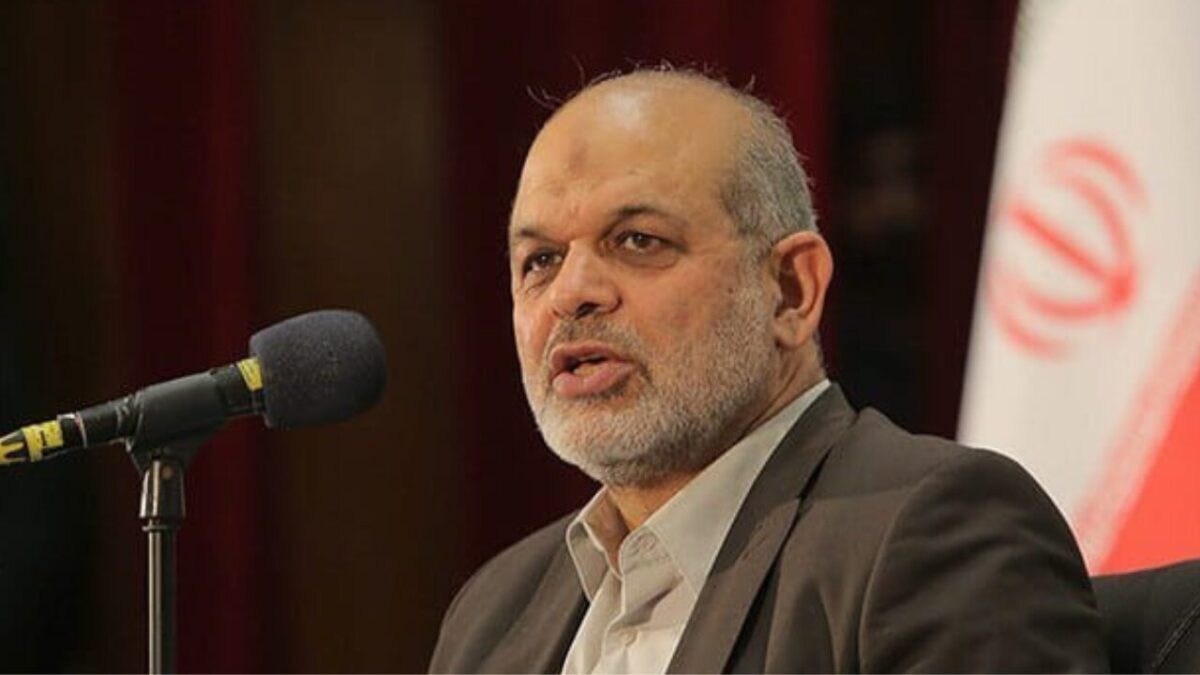
Vahidi is unusual among IRGC chiefs in having spent two decades in cabinet-level and academic-strategic roles — Al Jazeera’s profile makes the point that, unlike his two predecessors, he is not solely a military man.
- Deputy defence minister roles (2003–2009), including plans-and-programmes deputy under Shamkhani and chief deputy under Najjar [DOCUMENTED — Persian sources]. He has chaired the political-defence-security commission of the Expediency Discernment Council, of which he has been a member since 2012 [DOCUMENTED].
- Defence minister (2009–2013) under Ahmadinejad: presided over expansion of missile, drone, and conventional weapons production — a period IRGC-affiliated Fars News later celebrated as a golden era of Iranian deterrence [DOCUMENTED role; the characterisation is the regime’s own]. In 2010, while he held the post, the US sanctioned him over alleged involvement in Iran’s nuclear programme and pursuit of weapons of mass destruction [DOCUMENTED — sanctions listing]. Rafsanjani-era ties notwithstanding, he functioned as Khamenei’s reliable man in a cabinet increasingly at war with the Supreme Leader.
- Head of the Center for Defense Strategic Research (2013–2016), then president of the Supreme National Defense University (2016–2021) — the institution through which the IRGC trains and credentials the political-military elite [DOCUMENTED — Persian bios].
- Interior minister (2021–2024) under Raisi: the ministry that commands Iran’s police. In this role he oversaw the security response to the nationwide protests after Mahsa Amini’s death in morality-police custody in September 2022 — the largest protest wave in the Islamic Republic’s history. He publicly defended mandatory hijab enforcement, describing calls to remove the hijab as a colonial scheme by Iran’s enemies [DOCUMENTED — his own public statements]. An Iranian newspaper later published a classified document showing his ministry had ordered security agencies to monitor and photograph unveiled women — surveillance he had publicly denied was happening [DOCUMENTED — leaked primary document, reported by AP; a receipt of him lying on the record]. The US and EU sanctioned him for his role in the crackdown [DOCUMENTED — sanctions listings]. In 2023 he survived an impeachment threat, sacrificing his political deputy after a dispute with members of parliament [REPORTED — UANI dossier].
Part V — The ascent (2025–2026)
The chronology that made him commander:
- 13 June 2025: Hossein Salami killed in Israeli strikes during the 12-day war; Mohammad Pakpour appointed IRGC chief. (English Wikipedia’s infobox records a brief acting commandership for Vahidi at this point; Persian outlets at the time reported the rumour of his appointment was never officially confirmed [DISPUTED — treat the acting stint as unverified].)
- 27 December 2025: Vahidi appointed deputy commander-in-chief of the IRGC under Pakpour [DOCUMENTED].
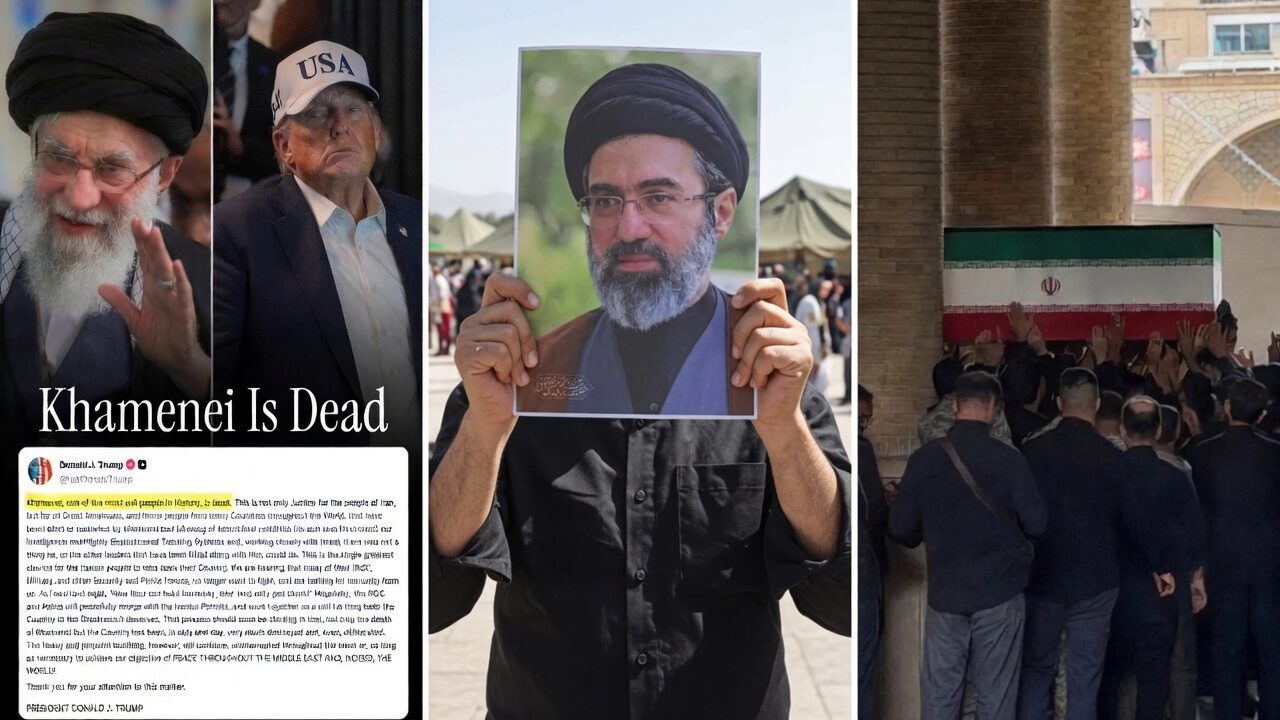
- 28 February 2026: Joint US-Israeli strikes kill Supreme Leader Ali Khamenei and Pakpour, among much of Iran’s senior command. Mojtaba Khamenei — reportedly wounded in the strikes that killed his father, his sister, and other family members — succeeds as Supreme Leader [DOCUMENTED deaths; the extent of Mojtaba’s injuries is REPORTED, not confirmed].
- 1 March 2026: Vahidi appointed Commander-in-Chief of the IRGC [DOCUMENTED].
Per ynet’s reconstruction of the succession fight, Vahidi — alongside parliament speaker Ghalibaf and former IRGC intelligence chief Hossein Taeb — backed Mojtaba Khamenei for Supreme Leader, against Ali Larijani’s argument for a moderate, unifying figure [REPORTED — single reconstruction; plausible but unverified].
Part VI — The power broker (2026)
What makes Vahidi the story of 2026 is not the title but the reporting on how he uses it.
- The Institute for the Study of War assesses that Vahidi and his inner circle have brought both Iran’s military response and its negotiating strategy under their control, and places him in the small group with direct access to Mojtaba Khamenei [REPORTED — open-source think-tank assessment, widely relied upon]. ISW has also described an episode in which hardline complaints that Foreign Minister Araghchi exceeded his mandate — by showing flexibility on the Axis of Resistance — led senior figures including Taeb to recall the negotiating delegation to Tehran [REPORTED].
- The Wall Street Journal’s June 2026 profile, citing Iranian and Arab officials: Vahidi pushed the ballistic-missile barrage on Israel over the hesitation of political leaders, advocated further strikes on Gulf states, repeatedly prevailed over President Pezeshkian and FM Araghchi in internal disputes, and personally made the decision to link ending the war to ending Israel’s campaign against Hezbollah in Lebanon — constraining Israeli operations by making them a threat to the talks [REPORTED — anonymous officials to a first-tier outlet].
- The Associated Press (Jon Gambrell, 21 May 2026), citing a regional official with direct knowledge of the mediation: after the failed April talks in Pakistan between Ghalibaf’s delegation and one led by US Vice President Vance — and the hardline backlash against Ghalibaf and Araghchi for perceived over-flexibility — Vahidi became the main point of contact for those negotiating with Iran [REPORTED]. The same piece carries the necessary counterweight: Hamidreza Azizi of the Middle East Institute cautions that “it is not a one-man show” — Vahidi is one power centre among several, some not publicly known [REPORTED — and a caution this file endorses; “Vahidi runs Iran” is a simplification].
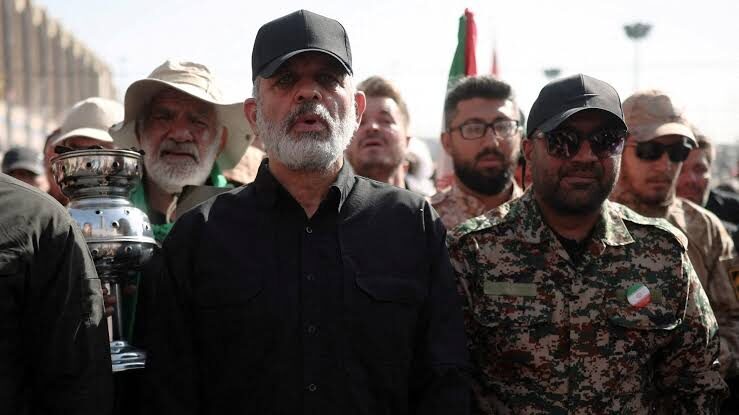
The ghost commander. Vahidi was last seen in public on 8 February 2026, weeks before the war began, and then vanished — resurfacing only on 2–3 July at the funeral ceremonies for Ali Khamenei, where state media showed him beside the casket and he delivered vows that the late leader’s death would mark a turning point against Iran’s enemies [DOCUMENTED — state media footage; AP noted it as his first public appearance in months]. The information vacuum around him breeds misinformation in both directions: in May, multiple outlets reported he had met Pakistan’s interior minister to receive a message from Washington — and IRIB denied it, demonstrating the circulating photos dated from his 2024 interior-ministry trip [DOCUMENTED denial of a REPORTED meeting; a case study in why this file grades everything].
Claims that go further — that Vahidi personally drafts the Supreme Leader’s statements, that he is the regime’s true ruler — circulate widely on X, sourced to Saudi and Israeli-aligned outlets [ALLEGED — unverified; consistent with the documented pattern, which is exactly why they spread, and exactly why they need the label].
His first message as wartime commander. Following Ali Khamenei’s burial, Vahidi issued a statement via IRGC-affiliated Sepah News, carried by Mehr News in English (July 2026): avenging the assassinated leader is a permanent, legitimate demand that will not fade until the perpetrators — he singled out the “child-killing” US military — are punished, and the assassination will not extinguish the resistance [DOCUMENTED — his own published statement via state-affiliated media]. A small OSINT footnote: Mehr’s English service styled him Major General in that item, while AP, Euronews and others consistently report him as Brigadier General — either a quiet promotion or a state-media error; I have found no promotion announcement [DISPUTED — minor, but the kind of detail worth watching].
Part VII — What he believes
From his own on-record statements and consistent positions across four decades [DOCUMENTED as statements; assessment of sincerity is the reader’s]:
- Permanent resistance: the Islamic Republic as a revolutionary project in existential confrontation with the US and Israel; deterrence through missiles, proxies, and asymmetric capability rather than accommodation.
- Dissent as foreign plot: his framing of the hijab protests as externally engineered, and his record at the interior ministry, reflect a worldview in which internal opposition is an extension of external war.
- Revolutionary institutions over civilian ones: from the Supreme National Defense University to the current concentration of decision-making in the IRGC, he has spent his career building the machinery of military primacy in governance.
- A caveat the hardline portrait usually omits: the man spent 1985–87 negotiating with Americans and, per the WSJ’s sources, calibrates escalation tactically. Alfoneh’s reading — that he knows his adversaries intimately — suggests a methodical operator, not a millenarian.
Part VIII — Assessment (clearly separated: this is analysis, not record)
If the documented record predicts anything, expect:
- Ceasefires as instruments, not endpoints. His entire career — Quds Force, defence ministry, the Hezbollah linkage in the current talks — treats pauses as regrouping opportunities. He will bargain hard, concede late and minimally, and preserve missile and enrichment leverage.
- Deeper IRGC control of the state. The pattern since February 2026 — recalled delegations, overruled ministers, an absent Supreme Leader — points toward consolidation, not restoration of civilian primacy.
- Internal repression as continuity. The interior-ministry record is the best predictor of how the regime under his influence treats dissent during wartime strain.
- The risk in the system: a decision-maker who is ideologically committed, personally unaccountable (he cannot travel to half the world), and now largely unchecked. Miscalculation is priced in.
Sources
Primary and judicial: Interpol statements (2007, 2009); Argentine Foreign Ministry statements (April 2024); Argentine Federal Criminal Cassation Court ruling (April 2024); Rafsanjani memoirs (via UANI); US/EU sanctions listings; IRNA/state media appointment announcements.
Journalism and analysis: Wall Street Journal profile (June 2026, via Times of Israel); Associated Press — Jon Gambrell, “This hard-line Iranian general is a major player in talks with US over war,” 21 May 2026; Euronews (21 May 2026); Al Jazeera (6 March 2026); IranWire (March and July 2026); ISW Iran Updates (2026); PBS Frontline Tehran Bureau (2012); ynet (March 2026); The Week (April 2026); JNS/Israel Hayom (March 2026); The Media Line (April 2026).
Dossiers and reference: UANI profile and April 2026 PDF; English and Persian Wikipedia; Marefa (Arabic). Regime-affiliated and Persian accounts of his career: Tasnim, Fars, Mehr/Sepah News (July 2026 statement), Jamaran, Rokna, Eghtesad Online, Ensaf News — used here as the regime’s own version of events, attributed as such.
Corrections welcome — with receipts.